
 Pin It
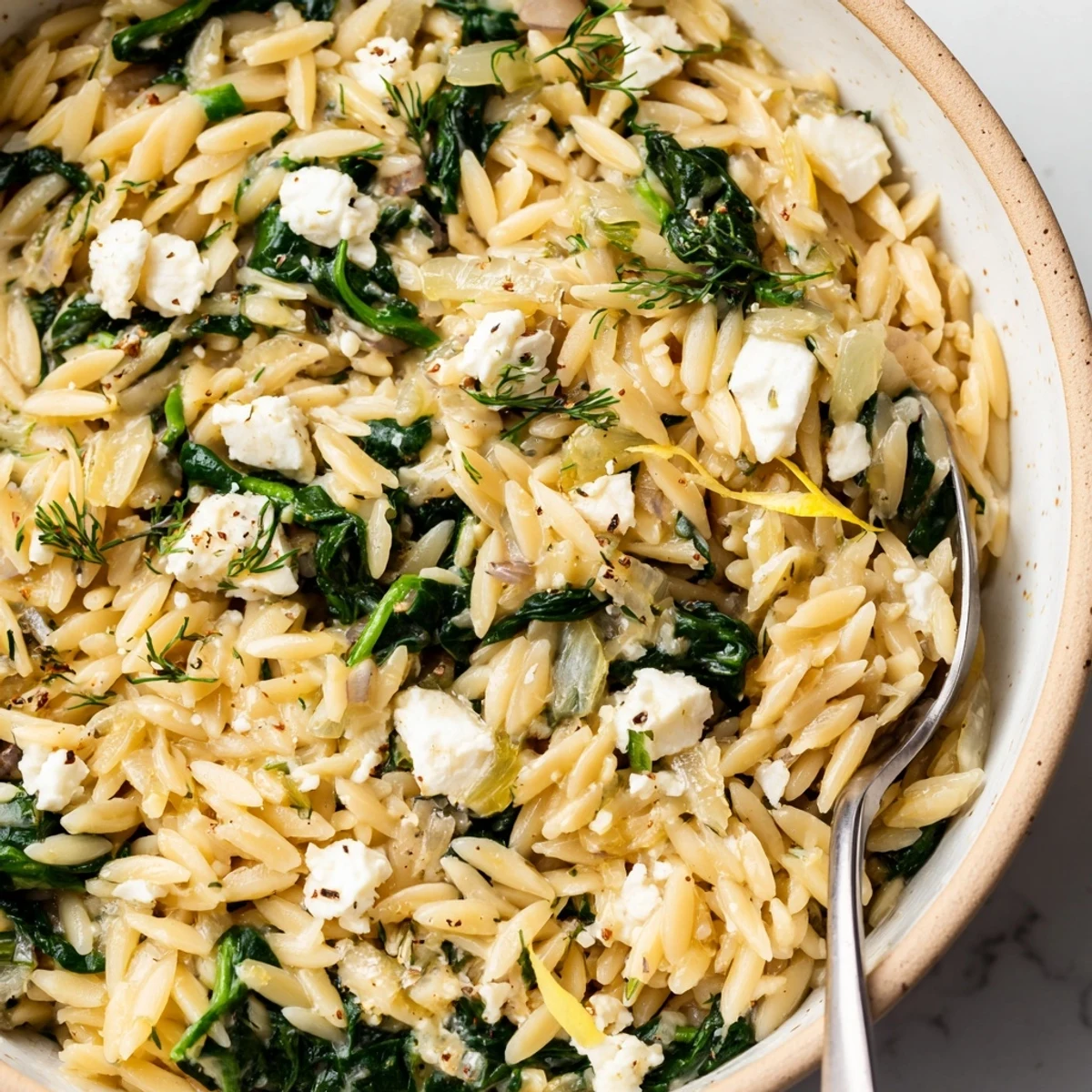
 This one-pan lemon orzo takes about 30 minutes and serves 4. Toast the orzo, then simmer in vegetable broth with lemon zest and juice until al dente. Fold in fresh spinach and crumbled feta, finish with dill and a pinch of red pepper flakes for brightness. Sauté onion and garlic first for depth. Serve immediately; stir in chickpeas or grilled chicken to boost protein.
The sizzle of onions hitting a hot pan on a Tuesday evening is its own kind of therapy, and this lemon orzo situation turned a dreary weeknight into something worth remembering. I had a half used container of feta staring at me from the fridge and a bag of spinach on its last leg. Twenty minutes later, I was eating standing over the stove, telling myself I would plate it properly for the photo. I did not plate it properly.
My neighbor Sandra knocked on my door the second time I made this, drawn by the smell of garlic and lemon drifting through the hallway. She stood in my kitchen with a glass of wine and watched me fold spinach into the pan, and then she ate two bowls without coming up for air. Now she texts me every Monday asking if orzo night is happening.
Ingredients
- Orzo pasta (1 cup, 200g): The star of the show, and toasting it before adding liquid gives it a nutty edge you will not get otherwise.
- Olive oil (1 tablespoon): Just enough to soften the onion and coat the orzo, use a decent one here since the flavor carries through.
- Yellow onion (1 small, finely chopped): Builds the sweet savory base that makes everything else feel rounded and complete.
- Garlic (2 cloves, minced): Add it late and do not let it brown, burnt garlic will hijack the whole pan.
- Fresh baby spinach (5 oz, 140g): Wilted down it practically disappears, which is perfect if you are feeding someone who thinks they hate greens.
- Lemon (zest and juice of 1 large): Split the juice between the cooking liquid and the finish so the citrus hits you in layers.
- Vegetable broth (2 cups, 480ml): The orzo drinks this up and becomes rich and savory without needing butter or cream.
- Feta cheese (3 oz, 85g, crumbled): Stirred in at the end so it melts just slightly into creamy little pockets throughout.
- Crushed red pepper flakes (1/4 teaspoon, optional): A gentle background warmth rather than actual heat, do not skip it.
- Salt and freshly ground black pepper (to taste): Season at the end because the feta and broth already bring salt to the party.
- Fresh dill or parsley (2 tablespoons, chopped): Dill is my preference, it has a grassy coolness that locks in the Mediterranean feel.
Instructions
- Wake up the pan:
- Heat olive oil in a large deep skillet over medium heat until it shimmers and the first whisper of warmth rises. You want the pan hot enough that the onion sizzles on contact but not so aggressive that anything colors too fast.
- Soften the onion:
- Add the chopped onion and cook for three to four minutes, stirring occasionally, until it turns translucent and sweet smelling. This patient minute is where the whole dish finds its footing.
- Bloom the garlic:
- Stir in the minced garlic and give it about thirty seconds, just until the kitchen smells incredible and you can hear it hissing softly. Pull it off the heat a second early rather than a second late.
- Toast the orzo:
- Pour the dry orzo straight into the pan and stir it around for a full minute to coat every grain in the fragrant oil. You will notice it turning slightly golden and smelling faintly like toasted bread.
- Build the broth:
- Pour in the vegetable broth, add the lemon zest and half the lemon juice, then give everything a good stir. Bring it to a gentle simmer, then drop the heat to low.
- Cover and cook:
- Put the lid on and let it cook for ten to twelve minutes, stirring once or twice so nothing sticks to the bottom. The orzo should be tender but still have a slight bite when you taste it.
- Wilt the spinach:
- Uncover the pan and fold in the spinach, using tongs or a spatula to toss it through the hot orzo. Within a minute or two it will collapse down to almost nothing.
- Bring it home:
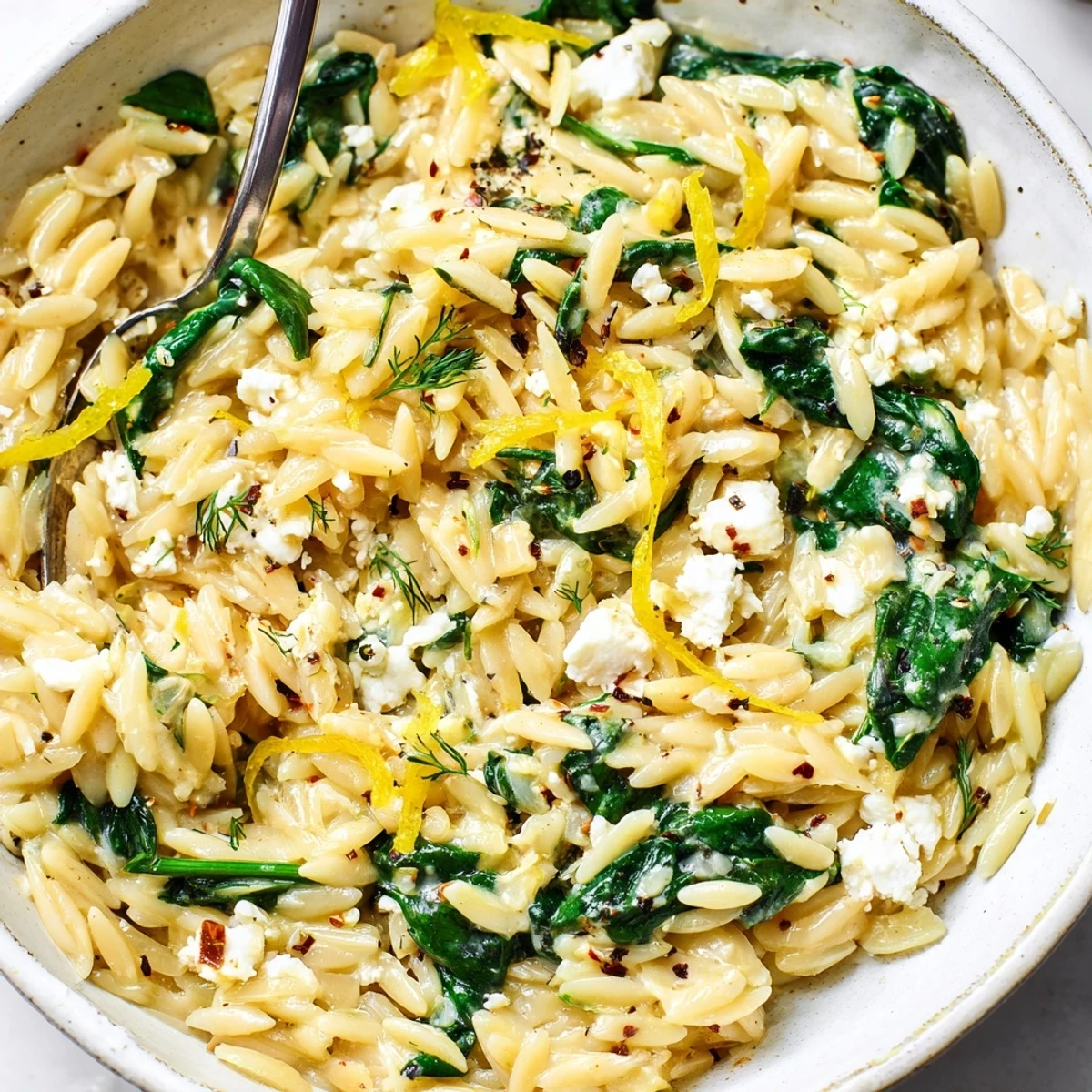
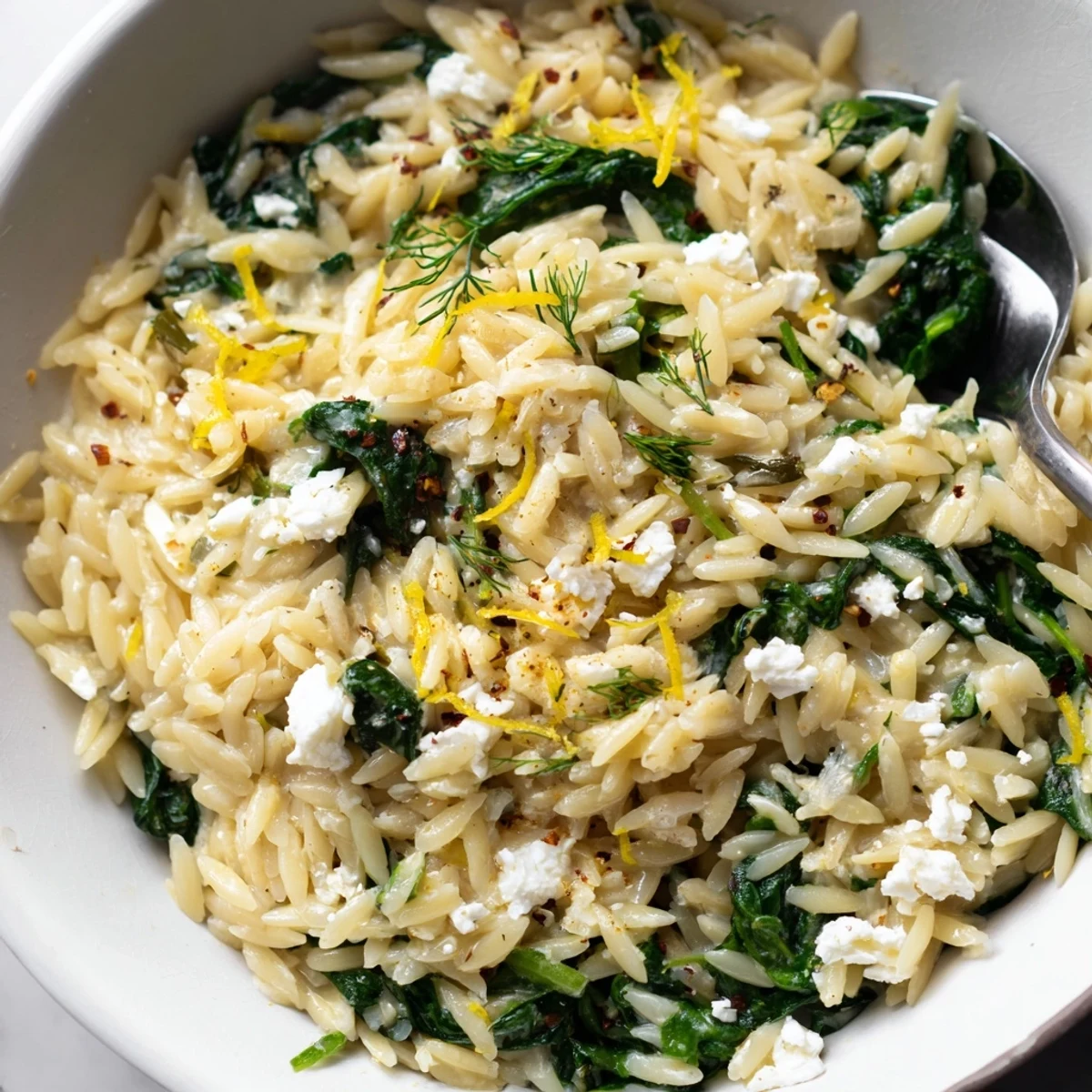
- Stir in the crumbled feta, the remaining lemon juice, red pepper flakes, and a generous crack of black pepper. Scatter the fresh dill over the top, remove from heat, and serve right away while it is still steamy and loose.
 Pin It
 There was a night in early March when the rain would not stop and I made this orzo for just myself, standing barefoot on the kitchen tile with the radio on. The lemon hit the hot pan and the whole apartment smelled alive. I ate it curled on the couch with a ridiculous amount of extra feta on top, and it was exactly the right dinner for no reason at all.
Making It Your Own
This recipe is a canvas more than a rulebook, and I have thrown in whatever needed using at least a dozen different ways. A can of drained chickpeas stirred in at the end turns it into something genuinely filling. Arugula instead of spinach gives it a peppery bite that plays beautifully with the feta.
What to Drink With It
A cold glass of Sauvignon Blanc is the obvious move and honestly the correct one, the grassy citrus notes mirror exactly what is happening in the pan. If white wine is not your thing, a squeeze of sparkling water with lemon does the same refreshing job without overthinking it.
Leftovers and Storage
Leftover orzo firms up in the fridge into something closer to a pasta salad, which is not a bad thing at all. A splash of broth or water and a minute in the microwave brings it back to creamy life.
- Store it in an airtight container and eat within three days for the best texture.
- Add the fresh herbs after reheating rather than before, they get slimy otherwise.
- A squeeze of fresh lemon at the end wakes up leftovers like nothing else.
 Pin It
 This is the kind of recipe that stays in your back pocket once you make it the first time. Simple, bright, and forgiving enough that it works even on the nights you barely feel like cooking.
Recipe Questions & Answers
- → Can I substitute the spinach with another green?
-
Yes. Kale or arugula work well—kale needs a bit longer to wilt, while arugula should be added at the end to preserve its peppery bite.
- → How do I prevent the orzo from becoming mushy?
-
Toast the orzo briefly in oil before adding liquid, use the stated liquid ratio, bring to a simmer then reduce heat and cover. Stir occasionally and test for al dente—remove from heat as soon as most liquid is absorbed.
- → What type of broth is best?
-
Vegetable broth keeps the dish vegetarian and bright, but low-sodium chicken broth adds depth. Taste and adjust salt at the end, especially if using salted feta.
- → How can I make this gluten-free?
-
Use a certified gluten-free orzo alternative (brown rice orzo or corn-based). Cooking times and liquid amounts may vary—follow package guidance and aim for al dente.
- → What is the best way to store and reheat leftovers?
-
Store in an airtight container in the refrigerator for 3–4 days. Reheat gently on the stovetop with a splash of broth or olive oil, or microwave with a few drops of water to loosen the pasta.
- → Can I swap the feta for another cheese?
-
Yes—crumbled goat cheese or ricotta salata provides a similar tangy, creamy element. Add softer cheeses at the end to avoid overmelting.