
 Pin It
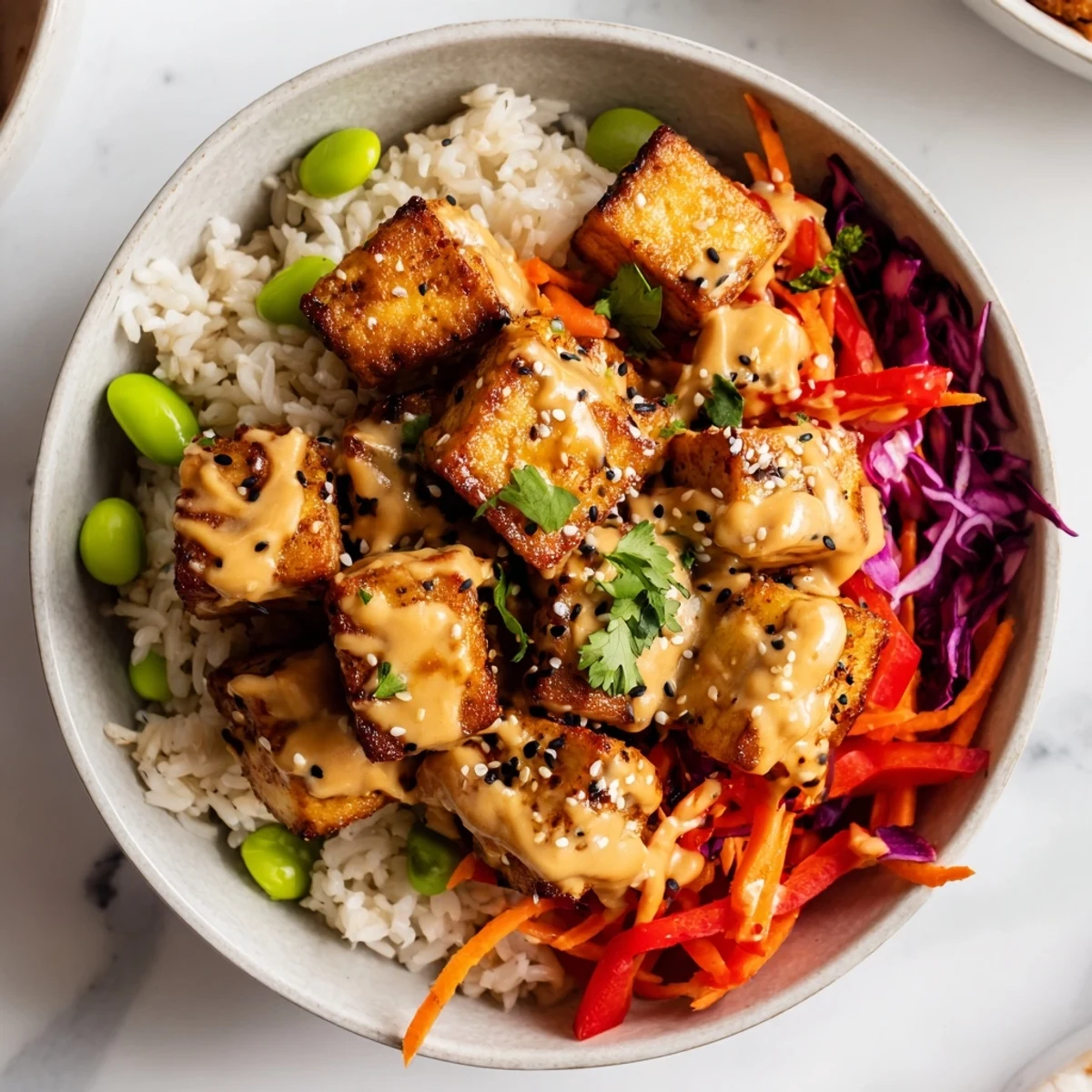
 This vibrant rice bowl brings together golden, crispy tofu and a rainbow of fresh vegetables over fluffy jasmine rice, all tied together with a rich and tangy peanut sauce.
Ready in just 40 minutes, it makes an ideal weeknight dinner or meal-prep lunch. The tofu is marinated in soy sauce, coated in cornstarch, and pan-fried until perfectly crispy on all sides.
The peanut sauce comes together in minutes with pantry staples like peanut butter, soy sauce, lime juice, and a touch of maple syrup. Feel free to customize the vegetables based on what's seasonal or what you have on hand.
The sound of tofu sizzling in sesame oil is one of those small kitchen pleasures that makes the whole apartment smell like something good is about to happen.
My roommate walked in halfway through assembly once and just stood there watching me arrange vegetables like I was painting something.
Ingredients
- Firm tofu (400 g): Pressing it well is the difference between soggy and crispy, so give it at least fifteen minutes under a heavy pan.
- Soy sauce (2 tbsp for marinade): This is the salty backbone of the tofu coating.
- Cornstarch (1 tbsp): The secret to that golden crust on every side of each cube.
- Sesame oil (1 tbsp): Use toasted sesame oil if you can find it, the aroma is incomparable.
- Jasmine or basmati rice (250 g): Jasmine gives a floral sweetness but basmati works beautifully too.
- Water (500 ml) and salt (half tsp): For cooking the rice.
- Carrot (1 medium, julienned): Adds crunch and a bright orange contrast.
- Red cabbage (1 cup, thinly sliced): The color alone makes the bowl feel special.
- Red bell pepper (1, thinly sliced): Sweetness that balances the salty peanut sauce.
- Edamame (100 g, cooked and shelled): A quick protein boost that requires zero effort.
- Spring onions (2, sliced): Scatter these on last for a fresh bite.
- Sesame seeds (1 tbsp): Toasted if you have the extra two minutes.
- Fresh coriander or cilantro: Optional but it brightens everything.
- Creamy peanut butter (80 g): Natural peanut butter works best, avoid the sweetened kinds.
- Soy sauce (2 tbsp for sauce): Brings umami depth to the sauce.
- Rice vinegar (1 tbsp): A mild tang that keeps the sauce from being too heavy.
- Lime juice (1 tbsp): Fresh is the only way here.
- Maple syrup or honey (2 tsp): Just enough sweetness to round everything out.
- Garlic (1 clove, minced): One clove is plenty, raw garlic is assertive.
- Grated fresh ginger (1 tsp): Freeze your ginger and grate it straight from frozen, it works like magic.
- Warm water (60 ml): Add more slowly until the sauce reaches a pourable consistency.
Instructions
- Cook the rice:
- Rinse the rice under cold water until it runs clear, then bring 500 ml water to a boil with salt, add the rice, drop to low, cover, and let it steam for twelve to fifteen minutes until tender. Fluff with a fork and set it aside.
- Marinate the tofu:
- Toss the cubed tofu with soy sauce and let it sit for five minutes so every piece drinks in the flavor. Sprinkle cornstarch over the top and toss again until each cube is evenly coated.
- Crisp the tofu:
- Heat sesame oil in a large non stick skillet over medium heat, then add the tofu and cook, turning occasionally, until all sides turn golden and crispy, about eight to ten minutes. The patience here pays off enormously.
- Whisk the peanut sauce:
- In a bowl, combine peanut butter, soy sauce, rice vinegar, lime juice, maple syrup, garlic, ginger, and warm water, whisking until everything becomes smooth and creamy. Taste it and adjust lime or sweetness as you like.
- Build the bowls:
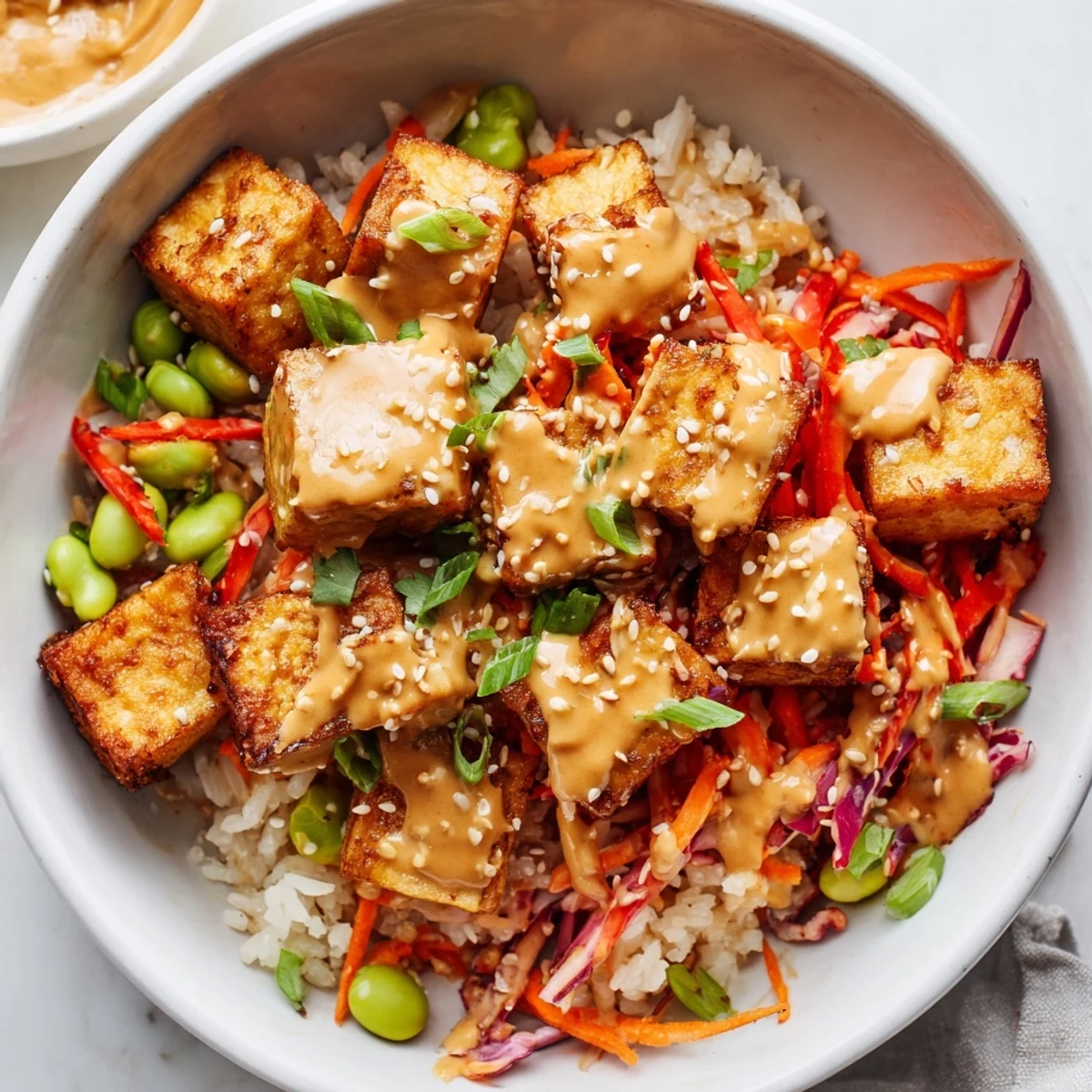
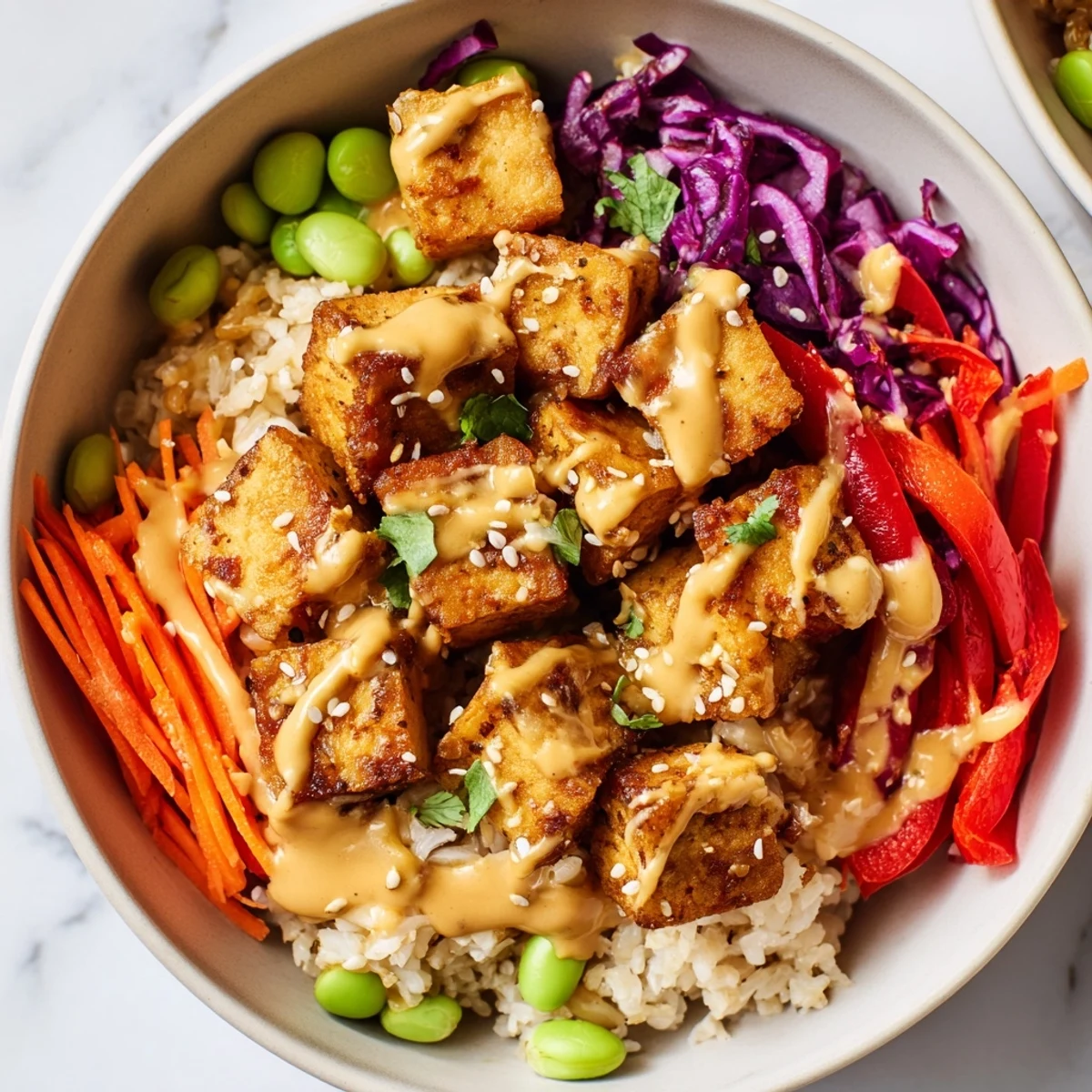
- Divide rice among four bowls and arrange tofu, carrot, cabbage, bell pepper, edamame, and spring onions on top in sections. Drizzle peanut sauce generously over everything.
- Finish and serve:
- Sprinkle with sesame seeds and fresh coriander, then serve immediately while the tofu is still warm and crisp.
 Pin It
 I once packed this bowl for a picnic and ate it cold on a blanket, and somehow the peanut sauce tasted even better mellowed by the chill.
Serving Suggestions
Sliced avocado folded in adds a buttery richness that works especially well if you are serving this as a main dinner rather than a quick lunch.
Making It Your Own
Swap the vegetables based on whatever is wilting in your crisper drawer, shredded kale or quick pickled radishes are two of my favorite substitutions.
Storage and Leftovers
Keep the sauce separate from the rice and vegetables if you plan to save portions for later, it reheats beautifully the next day.
- Store tofu in its own container to keep it from going soft.
- The sauce will keep in the fridge for up to five days.
- Assemble fresh when ready to eat for the best texture.
 Pin It
 This is the kind of meal that makes you feel good about eating at home, simple, colorful, and deeply satisfying.
Recipe Questions & Answers
- → Can I use extra-firm tofu instead of firm tofu?
-
Yes, extra-firm tofu works great and actually holds its shape even better during pan-frying. Just make sure to press it well to remove excess moisture before cubing and marinating.
- → What can I substitute for peanut butter in the sauce?
-
Sunflower seed butter, almond butter, or tahini all work as alternatives. Sunflower seed butter is the best option for a nut-free version, while tahini will give the sauce a slightly more earthy flavor.
- → How do I store leftovers?
-
Store the rice, tofu, vegetables, and sauce in separate airtight containers in the refrigerator for up to 3 days. Reheat the tofu in a skillet to maintain its crispiness, and warm the sauce gently with a splash of water to loosen it.
- → Can I make the peanut sauce spicier?
-
Absolutely. Add sriracha, chili garlic sauce, or red pepper flakes to taste. Start with a small amount and adjust until you reach your preferred level of heat.
- → Is this dish gluten-free?
-
Not as written, since it contains soy sauce. However, you can easily make it gluten-free by swapping regular soy sauce for tamari or coconut aminos. Double-check that your other ingredients are certified gluten-free as well.
- → What type of rice works best for this bowl?
-
Jasmine rice is ideal for its fragrant, slightly sticky texture, but basmati rice works well too. Brown rice or quinoa are also great alternatives if you prefer a whole-grain option, though cooking times will vary.