 Pin It
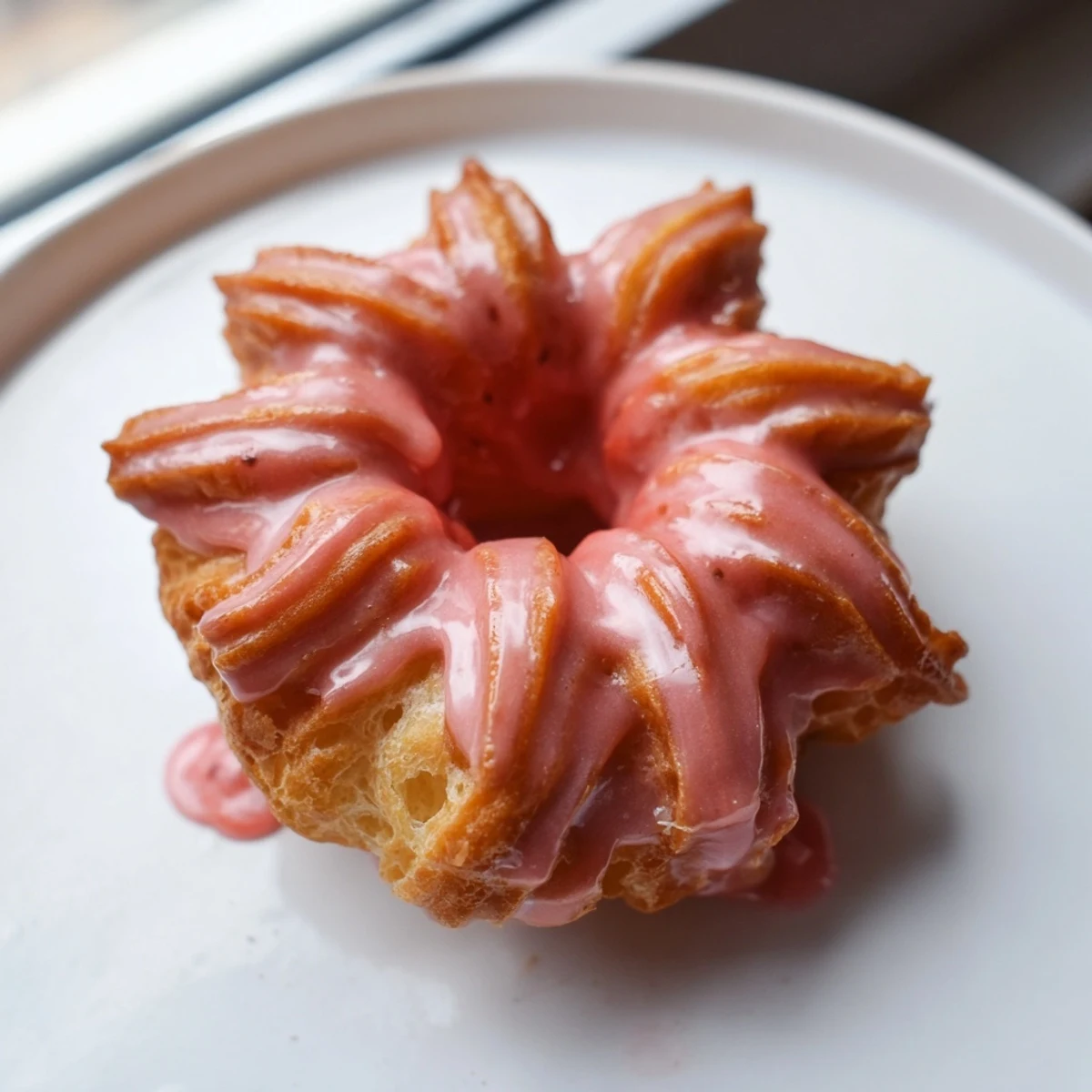
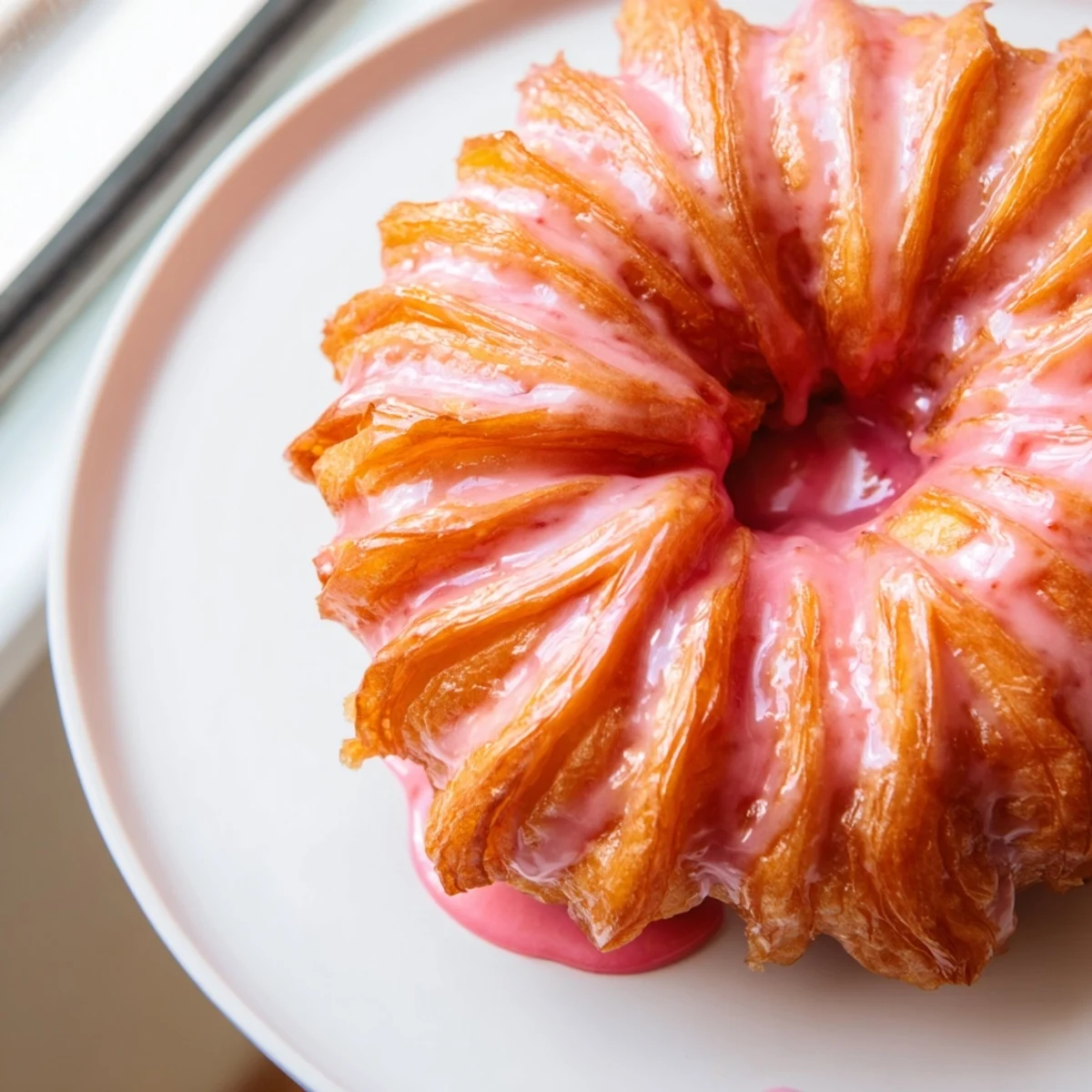
 French crullers are elegant ring-shaped pastries made from choux dough, deep-fried until golden and puffed, then dipped in a vibrant strawberry glaze.
The dough comes together quickly on the stovetop—butter, water, and flour form a smooth base before eggs are beaten in one at a time for maximum airiness.
Piped into rings and fried at 350°F, each cruller emerges with a crisp exterior and custardy, hollow interior.
A simple glaze of mashed fresh strawberries, powdered sugar, and a splash of lemon juice adds fruity sweetness and a beautiful pink finish.
The oil crackled and popped the morning I decided crullers were going to be my weekend project, mostly because a bakery across town charged four dollars each and I refused to accept that math. Steam curled off the saucepan as the butter melted into the water, and somewhere between that first vigorous stir and the dough pulling itself into a glossy ball, my kitchen smelled like a Parisian shop window. Strawberry glaze felt like the natural twist, a way to pretend I was being creative instead of just restless. Fifty minutes later I had eight wobbly, golden rings cooling on a rack and a floor that needed mopping.
I set the finished crullers on a plate and carried them to the backyard where my neighbor was already suspicious of anything that came out of a pot of oil. She bit into one, paused, and quietly asked if I could make more next Saturday.
Ingredients
- Unsalted butter (6 tbsp, cubed): The fat that gives choux its richness and helps create steam for that signature puff, so do not substitute with margarine.
- All purpose flour (1 cup): Measured by spooning into the cup and leveling off, because packed flour will make dense crullers that never fully hollow out.
- Large eggs (3): Added one at a time to build structure, and they must be at room temperature so the dough does not seize or turn greasy.
- Vanilla extract (1 tsp): A quiet background note in the pastry itself that rounds out the eggy flavor.
- Fresh strawberries (1/2 cup, hulled and chopped): The star of the glaze, and genuinely ripe ones mean you can skip any artificial extract entirely.
- Powdered sugar (1 cup, sifted): Sifting is nonnegotiable here unless you enjoy lumpy glaze on a pastry you just spent an hour making.
- Milk (1 to 2 tbsp): Added gradually to thin the glaze to a consistency that coats without sliding right off.
- Lemon juice (1/4 tsp): Just enough to wake up the strawberry flavor and cut through the sweetness.
- Vegetable oil (for frying): You need about two inches of neutral oil in a deep pot, and canola or peanut works best.
Instructions
- Build the choux base:
- Combine water, cubed butter, sugar, and salt in a saucepan over medium heat and bring it to a full boil, watching the butter melt completely before moving on.
- Stir in the flour:
- Add all the flour at once and stir violently with a wooden spoon until the mixture clumps into a single ball and leaves the sides of the pan clean, about one to two minutes.
- Cool and add eggs:
- Take the pan off the heat and let it rest for five minutes so the eggs do not scramble on contact, then beat them in one at a time until each fully disappears before adding the next.
- Pipe the rings:
- Transfer the dough to a piping bag fitted with a large star tip and pipe three inch rings onto individual squares of parchment paper, keeping the circles slightly uneven because that is part of the charm.
- Fry until golden:
- Lower each parchment square dough side down into oil heated to 350 degrees Fahrenheit, pull the paper off with tongs after a few seconds, and fry two to three minutes per side until deeply puffed and golden.
- Make the strawberry glaze:
- Mash the strawberries and press them through a fine sieve to extract about two tablespoons of pure juice, then whisk that liquid into sifted powdered sugar with lemon juice and just enough milk to reach a pourable consistency.
- Dip and set:
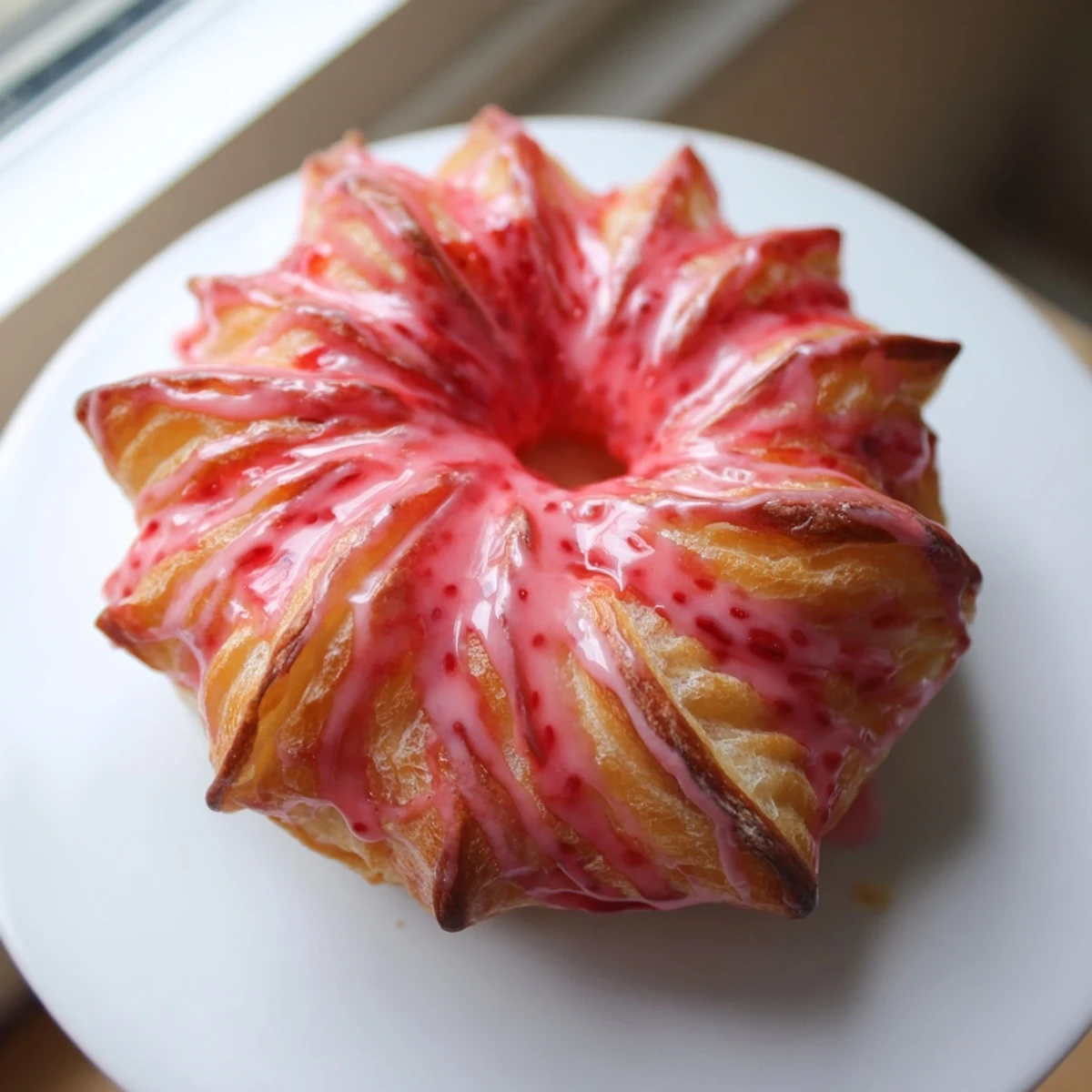
- Dip the top of each cooled cruller straight into the glaze, lift with a gentle twist, and rest them on a wire rack for about thirty minutes while the icing settles into a thin pink shell.
 Pin It
 Sunday mornings became a thing after that first batch, not because I planned it but because someone always showed up at the door around ten asking if the oil was hot yet.
Frying Without Fear
Deep frying at home feels dramatic the first time, pots of bubbling oil and splatter guards and the constant worry that something will go sideways. The trick is keeping the oil temperature steady and not crowding the pot, which means frying in small batches and having patience. A deep, heavy pot with high sides contains most of the splatter, and a slotted spatula gives you control when lowering dough in. Once you get the rhythm, it is honestly no more stressful than pancakes.
The Glaze Is Forgiving
Glaze thickness is a matter of personal preference and there is no wrong answer as long as it sticks to the pastry. Add milk a half teaspoon at a time because it is far easier to thin a thick glaze than to rescue one that is already too runny. Humidity affects powdered sugar dramatically, so what works on a dry Tuesday might need adjusting on a rainy Saturday morning.
Getting That Classic Shape
The star tip does most of the work here, creating ridges that crisp up unevenly and give crullers their unmistakable look. Pipe confidently and do not worry about a perfectly closed circle because the dough expands and seals most gaps during frying.
- Wet your fingertip with a tiny bit of water to press down any sharp peaks before frying.
- Chill the piped rings for ten minutes in the fridge if your kitchen is warm and the dough feels soft.
- Remember that slightly imperfect crullers still taste completely wonderful.
 Pin It
 These crullers will not wait around for you, and that is exactly what makes them special. Make them for someone you like, eat them while the glaze is still soft, and do not count on leftovers.
Recipe Questions & Answers
- → Why did my crullers collapse after frying?
-
Crullers usually collapse when the oil temperature is too low or the dough hasn't been cooked long enough on the stovetop. Make sure the flour mixture cooks for a full 1–2 minutes until it forms a ball and pulls away from the pan sides. Maintain oil at 350°F throughout frying.
- → Can I bake these crullers instead of frying?
-
Traditional French crullers rely on deep frying to achieve their signature crisp exterior and airy, hollow interior. Baking won't produce the same texture, but you can bake the choux rings at 400°F for about 25 minutes if you prefer to avoid frying.
- → What piping tip works best for crullers?
-
A large open star tip (such as Wilton 1M or Ateco 826) creates the classic ridged cruller shape. The ridges help the glaze adhere and give the pastry its traditional appearance. A large round tip can also work but won't produce the same visual detail.
- → How do I get a smooth strawberry glaze?
-
Mash the strawberries well and press them through a fine-mesh sieve to remove seeds and pulp, keeping only the juice. Whisk this juice into powdered sugar with a small amount of milk and lemon juice until you reach a smooth, pourable consistency.
- → Can I make the choux dough ahead of time?
-
You can prepare the choux dough and keep it in the piping bag, refrigerated, for up to 24 hours. Let it sit at room temperature for about 15 minutes before piping so it softens slightly. Once fried, crullers are best enjoyed the same day.
- → Can I use frozen strawberries for the glaze?
-
Yes, thaw frozen strawberries completely and mash them the same way. Strain the juice through a fine sieve. Keep in mind that frozen berries may release more liquid, so you might need less milk to reach the desired glaze consistency.