
 Pin It
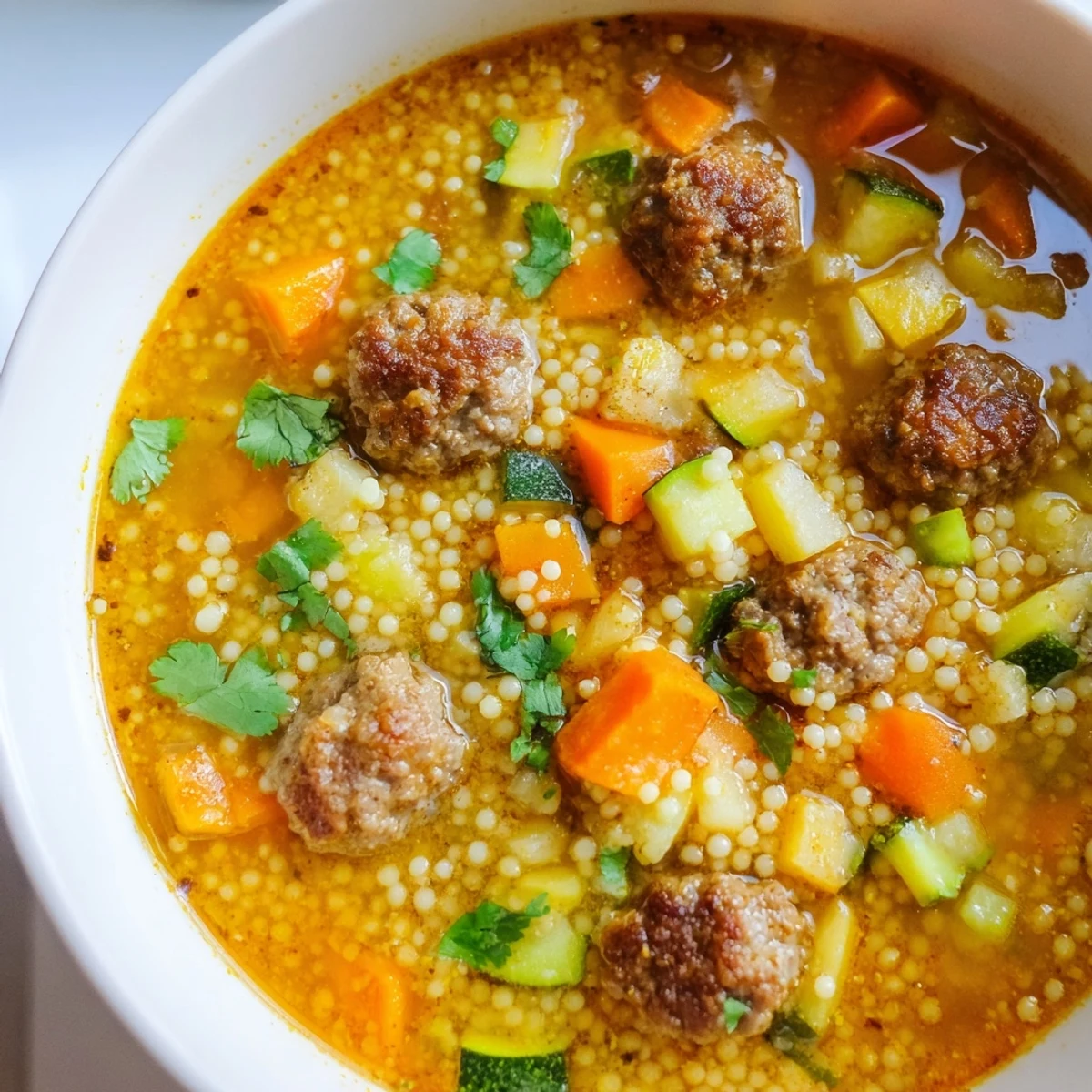
 This warming Moroccan-inspired soup brings together mini spiced beef meatballs, a medley of tender vegetables, and fluffy couscous in a richly aromatic broth seasoned with cumin, turmeric, ginger, and paprika.
Ready in about 55 minutes, it makes a satisfying main dish for four. The mini meatballs are delicately spiced with cinnamon and coriander, complementing the robust vegetable base and harissa-style heat.
Serve garnished with fresh cilantro and a squeeze of lemon for a comforting meal with authentic North African flair.
The rain was hammering against the kitchen window the evening I threw this soup together from half a pantry and a craving for something warmer than our drafty apartment deserved. Cinnamon in meatballs sounded strange at the time, but the smell that filled the room ten minutes later silenced every doubt I had. My roommate walked in, spoon already in hand, before I even called her to the table. Some dishes earn their place in your rotation without asking permission.
I made a double batch for a friend who had just moved into a new place with no furniture and nothing but a borrowed pot. We sat on the floor eating from mismatched bowls, and she told me it was the best housewarming gift she had ever received. I have been making it for every new home visit since.
Ingredients
- Ground beef or lamb (300 g): Lamb brings a richer, gamier depth but beef is easier to find and works beautifully.
- Onion (1 small, finely grated for meatballs + 1 small, diced for soup): Grating the onion keeps the meatballs tender without chunks that break apart.
- Garlic (1 clove for meatballs + 2 cloves for soup, minced): Fresh garlic matters here because the broth is simple and every layer counts.
- Fresh parsley (1 tbsp chopped, for meatballs): Adds a clean brightness that balances the warm spices inside each meatball.
- Fresh cilantro (1 tbsp chopped for meatballs + extra for garnish): Cilantro is classic in Moroccan cooking and ties the whole dish together.
- Ground cumin (1/2 tsp for meatballs + 1 tsp for soup): The backbone spice of this entire recipe so do not skimp on it.
- Ground coriander (1/2 tsp, for meatballs): Gives the meatballs a subtle citrusy warmth that pairs perfectly with cinnamon.
- Ground cinnamon (1/4 tsp, for meatballs): Just a pinch transforms the flavor into something unmistakably North African.
- Salt and black pepper (1/2 tsp salt + 1/4 tsp pepper for meatballs, plus more to taste for soup): Season the meatballs well because they need to carry flavor on their own.
- Olive oil (1 tbsp): A good glug to start the vegetables sweating and building that flavor base.
- Carrot (1 large, diced): Adds natural sweetness and a satisfying soft bite in every spoonful.
- Celery (1 stalk, diced): Provides an earthy backbone that you might not notice directly but would miss if it were gone.
- Zucchini (1 small, diced): Cooks down gently and absorbs the spiced broth like a sponge.
- Ground paprika (1 tsp): Brings a gentle smokiness and lovely color to the broth.
- Turmeric (1/4 tsp): Mostly for its golden hue and mild bitterness that rounds out the sweeter spices.
- Ground ginger (1/2 tsp): Adds warmth without the sharp bite of fresh ginger.
- Cayenne pepper (1/4 tsp, optional): Start with a pinch and taste before adding more because a little goes a long way.
- Chicken or vegetable broth (1.2 liters): Use a good quality broth since it is the foundation of the entire soup.
- Canned diced tomatoes (400 g): Their juices meld with the broth to create a slightly tangy, rich base.
- Instant couscous (120 g): It cooks in minutes off the heat, soaking up all that flavored liquid perfectly.
- Lemon wedges (for serving): A squeeze of lemon at the end brightens every bowl and cuts through the richness.
Instructions
- Make the mini meatballs:
- Combine the ground meat with grated onion, garlic, parsley, cilantro, cumin, coriander, cinnamon, salt, and pepper in a bowl. Wet your hands and roll small balls about two centimeters wide, then set them on a plate while you start the soup.
- Build the vegetable base:
- Heat olive oil in your largest pot over medium heat and cook the diced onion until soft and translucent. Toss in the garlic, carrot, celery, and zucchini, stirring occasionally until everything begins to soften and smell sweet.
- Bloom the spices:
- Sprinkle in the cumin, paprika, turmeric, ginger, and cayenne, stirring constantly for about a minute until the kitchen smells like a spice market.
- Create the broth:
- Pour in the broth and the canned tomatoes with all their juices, then bring everything to a rolling boil.
- Cook the meatballs gently:
- Slide the meatballs into the bubbling broth one by one, reduce the heat to low, cover the pot, and let them simmer peacefully for twenty minutes until they are cooked through and the vegetables are meltingly tender.
- Finish with couscous:
- Stir in the couscous, take the pot off the heat entirely, clamp on the lid, and wait five to seven minutes while the grains plump up and absorb the broth. Taste and adjust the salt and pepper before serving.
- Serve with love:
- Ladle into deep bowls, scatter fresh cilantro or parsley over the top, and put a lemon wedge on the side of each plate so everyone can squeeze to their liking.
 Pin It
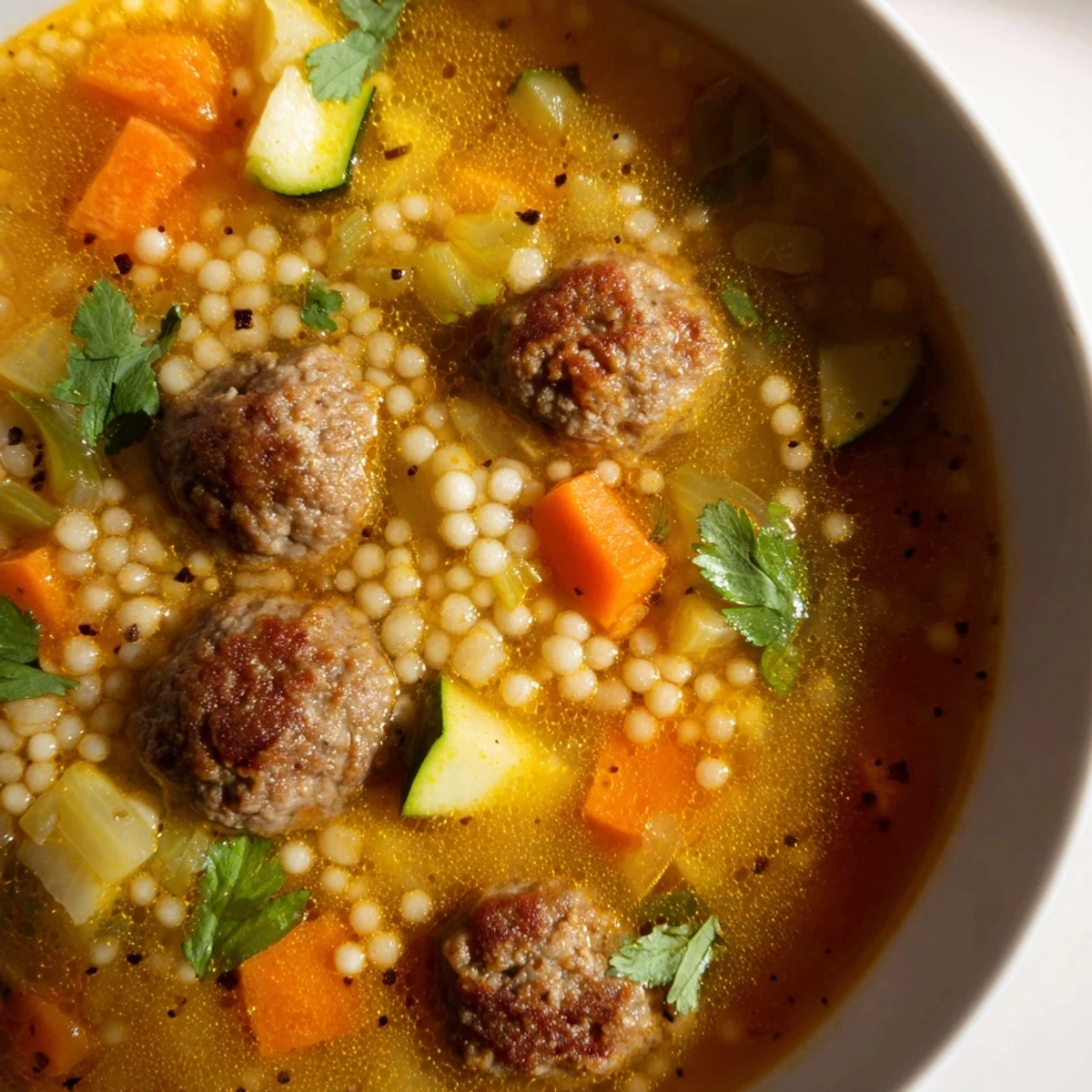
 One winter I brought a thermos of this soup to a holiday potluck and watched three people ask for the recipe before they even finished their first sip. It became the dish everyone expected me to bring after that, and honestly I never minded.
Choosing Between Beef and Lamb
Beef is reliable and crowd pleasing, but lamb is the traditional choice and gives the broth a deeper, more complex richness. If you can find good quality lamb, try it at least once because the difference is striking. A half and half mix is actually my favorite compromise.
Making It Your Own
Chickpeas are a natural addition that bring extra protein and a lovely creamy texture against the tender vegetables. You can also swap the couscous for cooked quinoa or rice if you need a gluten free version. The broth freezes beautifully on its own so you can make a big batch and add fresh couscous when you reheat.
Serving and Storing
This soup tastes even better the next day when the spices have had time to settle and deepen throughout the broth. A glass of Moroccan rosé or a cup of sweet mint tea alongside turns a simple dinner into something worth lingering over.
- Store leftovers in the fridge for up to three days and add a splash of broth when reheating since the couscous absorbs liquid overnight.
- Freeze the soup without the couscous for the best texture when you thaw it later.
- Always taste for salt after reheating because flavors tend to mellow in the cold.
 Pin It
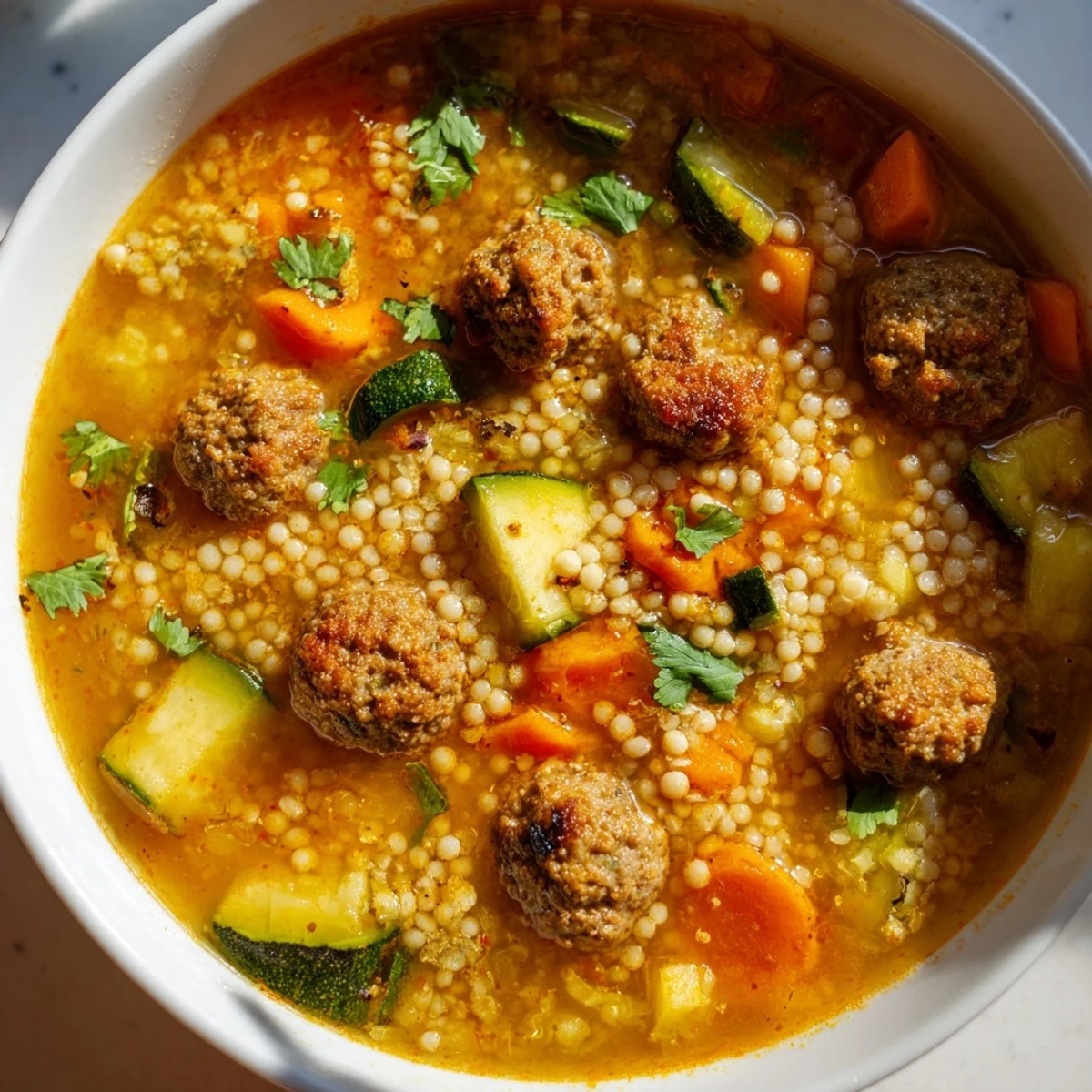
 This soup is the kind of meal that makes your kitchen smell like somewhere far away and wonderful. Ladle it up generously and let it do its quiet magic.
Recipe Questions & Answers
- → Can I use lamb instead of beef for the meatballs?
-
Yes, lamb works beautifully and adds a richer, more traditional Moroccan flavor. You can also use a half-and-half mix of beef and lamb for a balanced taste.
- → How do I store leftover Moroccan meatball soup?
-
Let the soup cool completely, then transfer to an airtight container. Refrigerate for up to 3 days. Reheat gently on the stovetop, adding a splash of broth if the couscous has absorbed too much liquid.
- → Can I make this soup gluten-free?
-
Absolutely. Simply replace the instant couscous with cooked quinoa or rice. Add it at the same stage and adjust the standing time accordingly.
- → What can I add for extra protein and texture?
-
Chickpeas are a natural addition that pairs perfectly with the Moroccan spices. Drain and rinse a can, then add them along with the broth. A handful of toasted almonds on top also adds a lovely crunch.
- → How spicy is this soup?
-
The soup is mildly spiced with warming notes from cumin, ginger, and turmeric. The cayenne pepper is optional, so you can adjust the heat level to your preference or omit it entirely for a family-friendly version.
- → Can I freeze this soup?
-
You can freeze the broth and meatball portion for up to 2 months. However, it is best to add the couscous fresh after reheating, as frozen couscous tends to become mushy and lose its fluffy texture.