
 Pin It
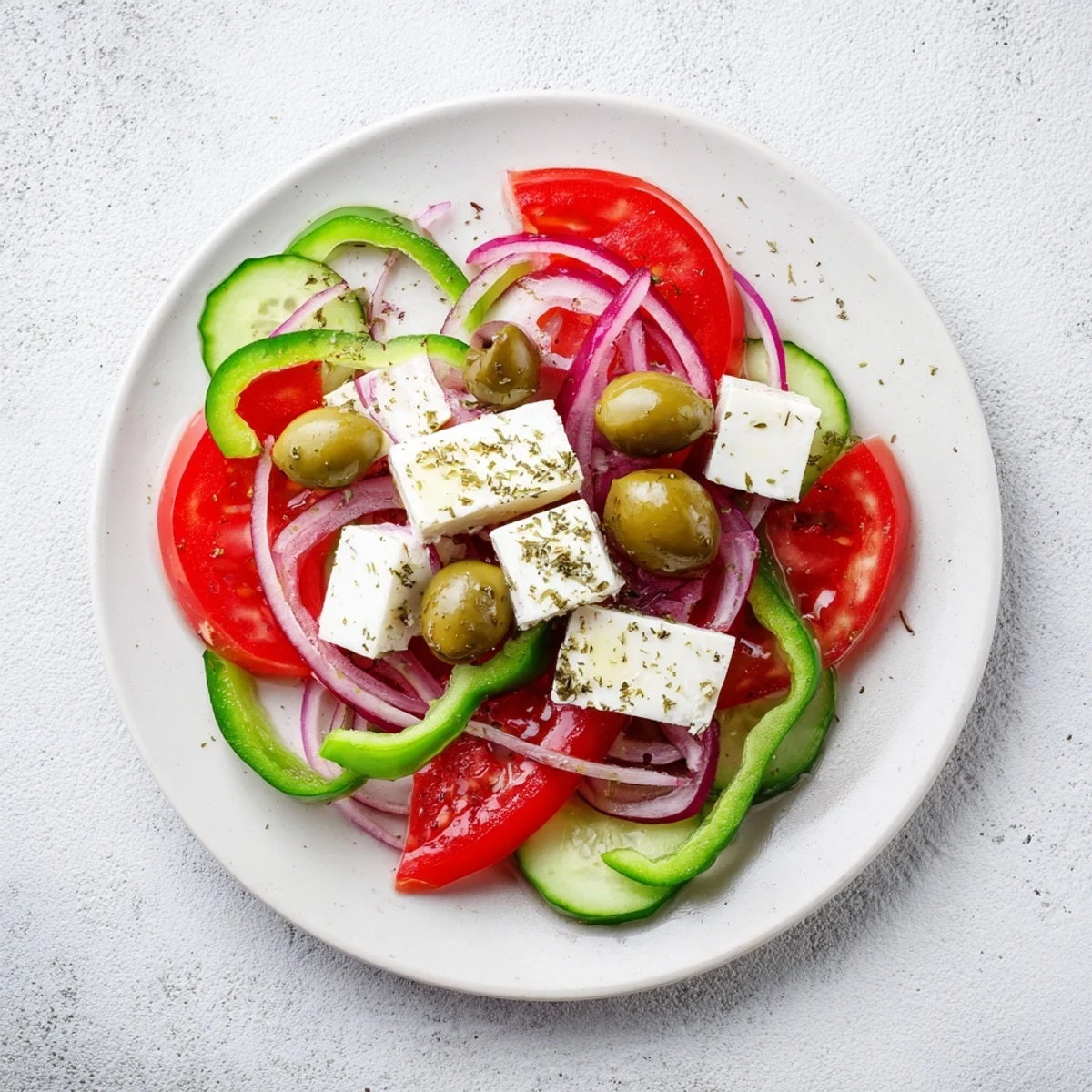
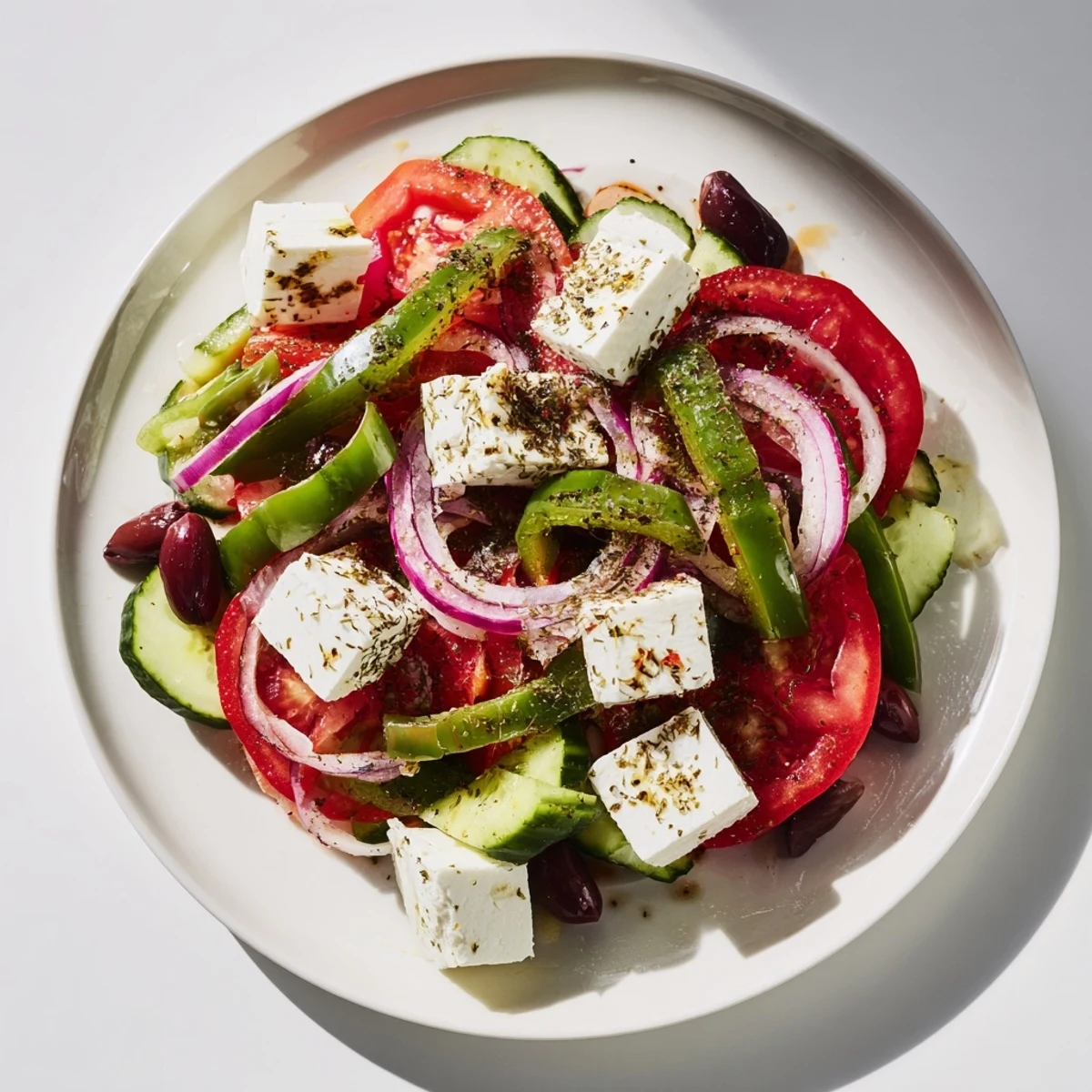
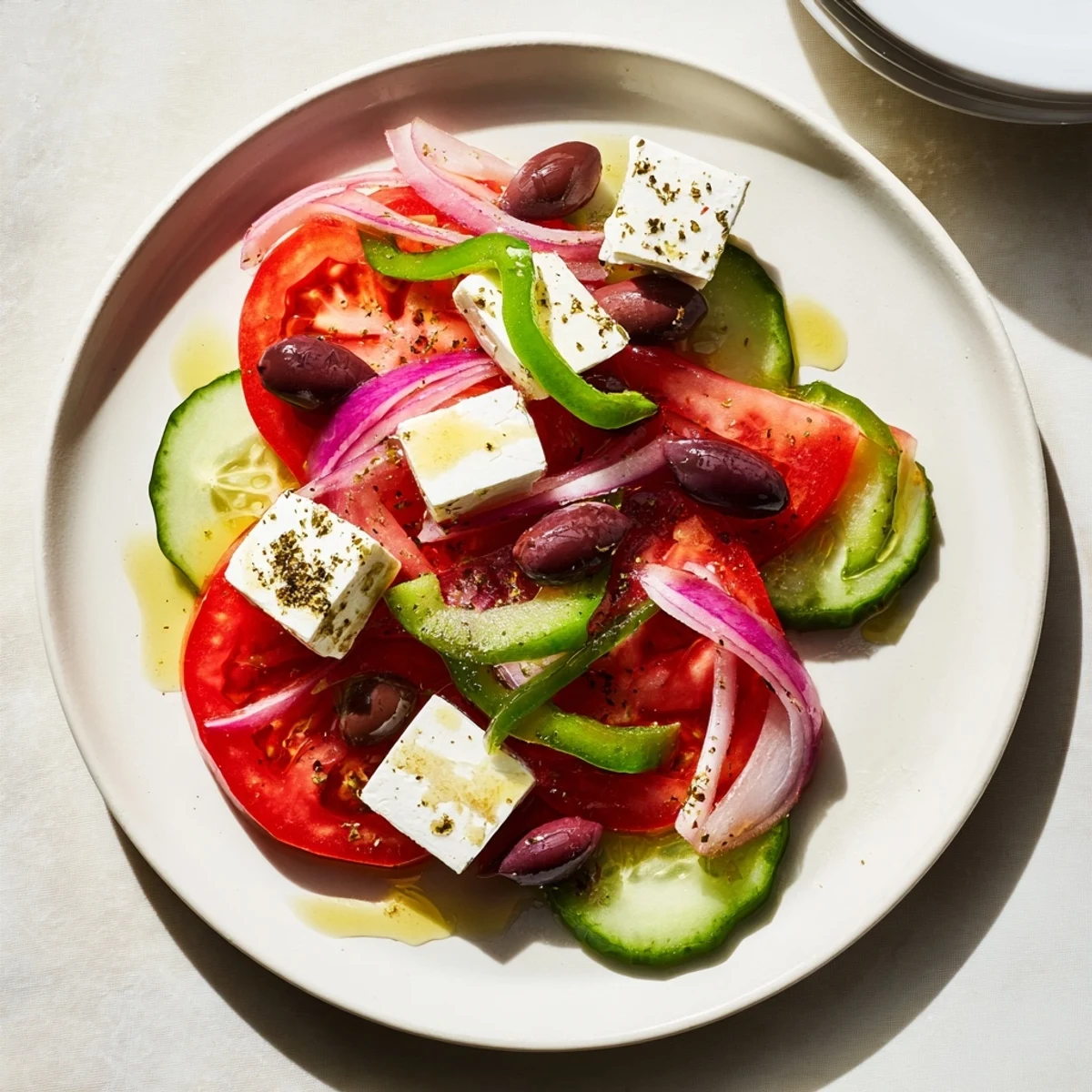
 This vibrant Greek salad combines juicy tomatoes, crisp cucumbers, red onions and green peppers with briny Kalamata olives and creamy feta cheese. The simple dressing of extra-virgin olive oil, red wine vinegar and oregano perfectly complements the fresh vegetables and tangy cheese. Ready in just 15 minutes, it's a perfect light meal or side dish that's both vegetarian and gluten-free. Serve with crusty bread for a more substantial offering.
The first time I made a proper Greek salad was during a sweltering July afternoon after my neighbor Maria shared her family's recipe. The kitchen windows were wide open as I sliced cucumbers, the Mediterranean breeze I imagined doing nothing to cool down my small apartment. Something about the vivid colors of the ingredients lined up on my cutting board felt like an edible painting waiting to happen.
Last summer, I brought this Greek salad to my friends rooftop potluck and watched as everyone gravitated toward its bright colors. Emma, who swore she hated raw onions, went back for seconds after discovering how the vinegar mellows their bite in this dish. By sunset, the bowl was empty and three people had texted me for the recipe before I even made it home.
Ingredients
- Kalamata olives: Spend the extra dollar or two on proper Kalamatas rather than regular black olives, as they bring that authentic briny depth that transforms the entire salad.
- Feta cheese: Look for Greek feta made from sheep milk if possible, and buy it in block form rather than pre-crumbled for a creamier texture and better flavor.
- Red onion: Slice these paper-thin and soak in cold water for 10 minutes if you find raw onions too pungent.
- Extra-virgin olive oil: This dressing is simple, so the quality of your olive oil will be front and center in every bite.
Instructions
- Prep the vegetables:
- Cut tomatoes into chunky wedges and slice cucumber into half-moons about a quarter-inch thick. The pieces should be substantial enough to spear with a fork but not so large that they're awkward to eat.
- Layer with intention:
- Place the colorful vegetables in a large bowl first, creating a beautiful base for your salad. The visual appeal is half the enjoyment of a good Greek salad.
- Add the stars:
- Scatter the feta and olives over the vegetables rather than mixing them in right away. This keeps the feta from breaking down too much and ensures every serving gets a fair share of these flavorful additions.
- Dress with care:
- Whisk the dressing ingredients until they emulsify slightly, then drizzle over the salad just before serving. A gentle toss with your hands gives you more control than utensils and prevents the delicate ingredients from bruising.
 Pin It
 When my cousin was going through a difficult time last year, I started bringing her lunch once a week. The day I brought this Greek salad, she closed her eyes after the first bite and smiled for the first time in weeks. We sat in comfortable silence, crunching through our salads, and somehow the simple act of sharing this vibrant food seemed to momentarily lighten the weight she was carrying.
Make It a Meal
While traditional Greek salad is perfect as is, Ive discovered it transforms into a complete meal with a few thoughtful additions. Sometimes I toss in a handful of chickpeas for protein or serve it alongside grilled sourdough rubbed with garlic. On particularly hungry days, adding some leftover grilled chicken or a scoop of cooked quinoa makes it substantial enough for dinner without compromising its essential Greek character.
Authentic Touches
After traveling to a small island in the Aegean, I learned that authentic Greek salads never contain lettuce, which surprised many of my friends when I mentioned it. The locals I met would often add a sprinkle of dried oregano at the very end, crushing it between their palms to release the essential oils. Some village tavernas served their salads with a whole block of feta on top rather than crumbled throughout, allowing each person to break off pieces as they ate.
Seasonal Adaptations
Through years of making this salad in every season, Ive found ways to adapt when summer tomatoes arent at their peak. In winter months, I sometimes roast cherry tomatoes to concentrate their flavor before cooling and adding them to the salad. During spring, I might add a handful of tender young arugula for a peppery note.
- For a sweeter variation in late summer, substitute ripe peaches for half the tomatoes when both are in season.
- If serving for a party, prepare all components separately and assemble just before guests arrive to prevent soggy vegetables.
- Keep the salad at room temperature for at least 15 minutes before serving to allow the flavors to fully develop.
 Pin It
 This Greek salad has taught me that sometimes the simplest combinations create the most profound flavors. When ingredients are allowed to shine on their own merit, each bite becomes a small celebration of what good food can be.
Recipe Questions & Answers
- → Can I prepare Greek salad in advance?
-
You can prepare the components ahead of time, but it's best to add the dressing just before serving to maintain the crispness of the vegetables. If needed, store the prepared vegetables and dressing separately in the refrigerator for up to 24 hours.
- → What can I substitute for Kalamata olives?
-
If Kalamata olives aren't available, you can substitute with black olives or green olives, though the flavor profile will be slightly different. Kalamata olives have a distinctive rich, briny taste that contributes to the authentic Greek flavor.
- → Is this salad suitable for a vegan diet?
-
This salad is not vegan as written due to the feta cheese. For a vegan version, simply omit the feta or substitute it with a vegan feta alternative, which is available in many grocery stores.
- → How can I make this Greek salad more filling?
-
To make this salad more substantial, consider adding cooked quinoa, chickpeas, or grilled chicken. Serving it with warm pita bread or crusty Greek bread on the side will also make it more filling.
- → Can I use a different vinegar for the dressing?
-
Red wine vinegar is traditional, but you can substitute with white wine vinegar, apple cider vinegar, or even fresh lemon juice for a different but complementary flavor profile.