
 Pin It
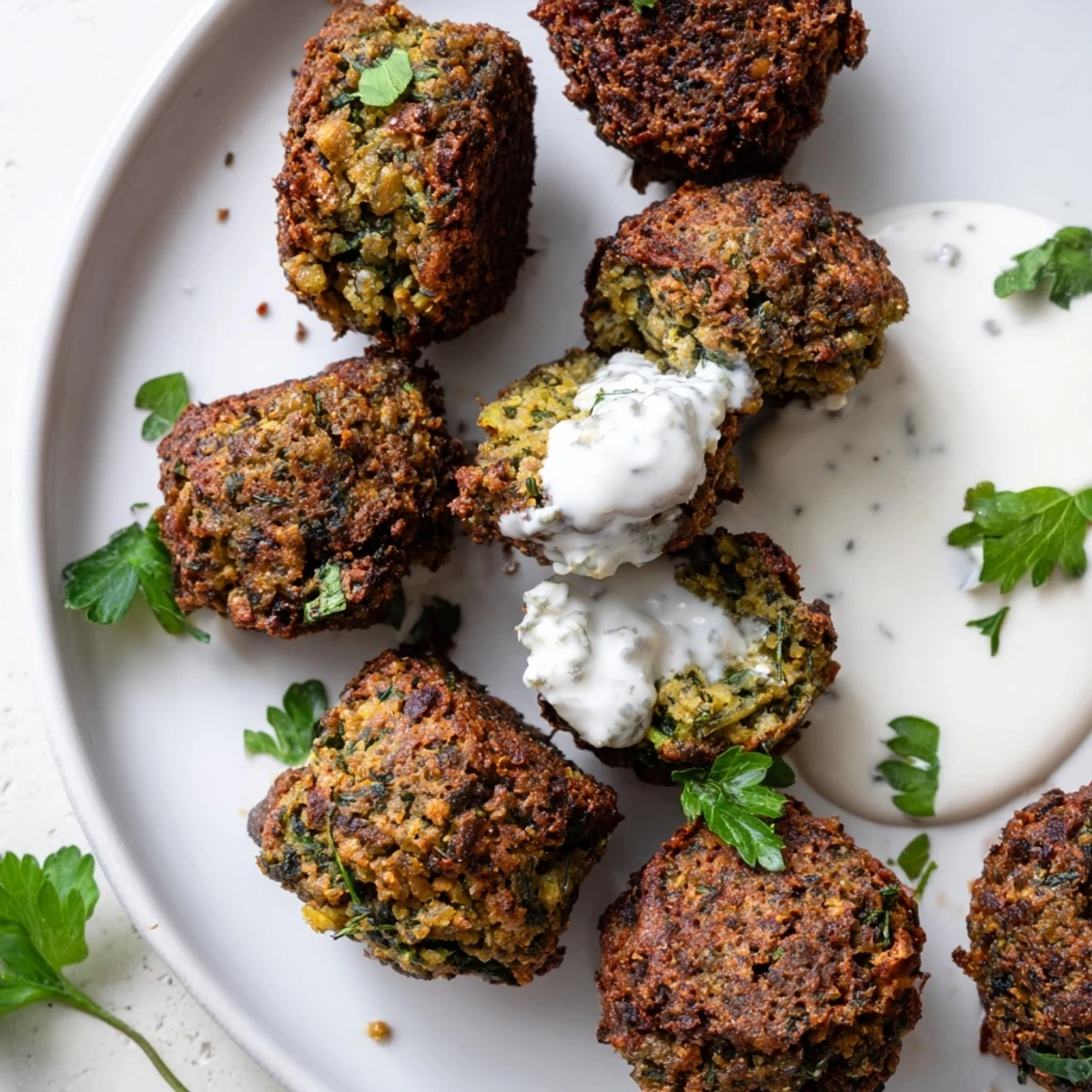
 These golden, crunchy falafel bites are loaded with fresh parsley, cilantro, and warm spices like cumin and coriander. Made from soaked chickpeas pulsed into a coarse mixture, they fry up irresistibly crisp on the outside while staying tender inside.
The creamy garlic yogurt sauce, brightened with lemon juice and fresh herbs, makes the perfect cooling complement. Ready in under an hour, they work beautifully as an appetizer, stuffed into warm pita, or served over a fresh salad as a light meal.
My apartment smelled like a Jerusalem street market the afternoon I nearly burned my eyebrows frying my first batch of falafel. Oil splattered everywhere, the smoke alarm screamed, and I still ate every single one standing over the stove. Something about that chaos hooked me, and I have been chasing the perfect crispy herb falafel ever since.
I made a triple batch of these for a rooftop potluck last summer and watched a plate of forty falafel disappear in under ten minutes. My friend David actually licked the yogurt sauce bowl, then denied it.
Ingredients
- Dried chickpeas (1 1/2 cups, soaked overnight): Do not swap for canned here. Canned chickpeas hold too much moisture and turn your falafel into sad little hockey pucks.
- Onion (1 small, roughly chopped): Any yellow or white onion works, just keep the pieces rough so the food processor can do its job evenly.
- Garlic (3 cloves for falafel, 1 for sauce): Fresh is nonnegotiable. The jarred stuff tastes flat and metallic next to the herbs.
- Fresh parsley (1 cup leaves): This is where most of that vivid green color comes from. Pack the cup generously.
- Fresh cilantro (1/2 cup leaves): Adds a bright, almost citrusy note that balances the earthy spices beautifully.
- Fresh dill (1/4 cup, optional): I skip it half the time, but when I include it, the falafel tastes surprisingly like something my grandmother would have made.
- Ground cumin (1 tsp): Toast it briefly in a dry pan and your whole kitchen will smell incredible.
- Ground coriander (1 tsp): Pairs with cumin like they were designed for each other, because frankly they were.
- Cayenne pepper (1/2 tsp, optional): Just enough warmth without making anyone reach for a glass of milk.
- Baking powder (1 tsp): This is the trick that keeps the inside light instead of heavy.
- All purpose flour (2 tbsp): Chickpea flour works too and makes the whole thing gluten free with zero compromise on texture.
- Salt (1 tsp) and black pepper (1/2 tsp): Season boldly. Underseasoned falafel is a tragedy.
- Vegetable oil (for frying): You need about two inches in your pan. Canola, sunflower, or any neutral oil with a high smoke point.
- Plain Greek yogurt (3/4 cup, for sauce): Full fat makes the creamiest sauce, but use whatever you have.
- Lemon juice (1 tbsp, for sauce): Fresh squeezed only. The bottled kind tastes like cleaning product.
- Chopped parsley or mint (2 tbsp, for sauce): Mint is traditional and lovely, but parsley is what I usually have on hand.
Instructions
- Prep your chickpeas:
- Drain and rinse the soaked chickpeas thoroughly, then spread them on a clean towel and pat them dry. They should feel dry to the touch but not shriveled.
- Build the mixture:
- Throw chickpeas, onion, garlic, parsley, cilantro, dill if using, cumin, coriander, cayenne, salt, and pepper into your food processor. Pulse in short bursts until you see a coarse, sandy texture that holds together when you pinch it, but still has visible bits of chickpea.
- Rest and bind:
- Scrape everything into a bowl and fold in the baking powder and flour. Cover with plastic wrap and tuck it into the fridge for twenty to thirty minutes so the mixture firms up and the flavors marry.
- Whip up the sauce:
- Stir together the yogurt, minced garlic, lemon juice, herbs, salt, and pepper in a small bowl. Taste it and adjust until it makes you happy, then park it in the fridge until serving time.
- Get the oil ready:
- Pour two inches of oil into a heavy skillet and heat it over medium high until it reaches 350 degrees. A tiny piece of falafel dropped in should sizzle enthusiastically but not violently.
- Shape and fry:
- Scoop tablespoon sized portions and roll them into balls or flatten them into small patties about one inch across. Fry in small batches, turning once or twice, until they are deeply golden and crisp, about two to three minutes per batch. Drain on paper towels and try not to eat them all before plating.
- Serve with joy:
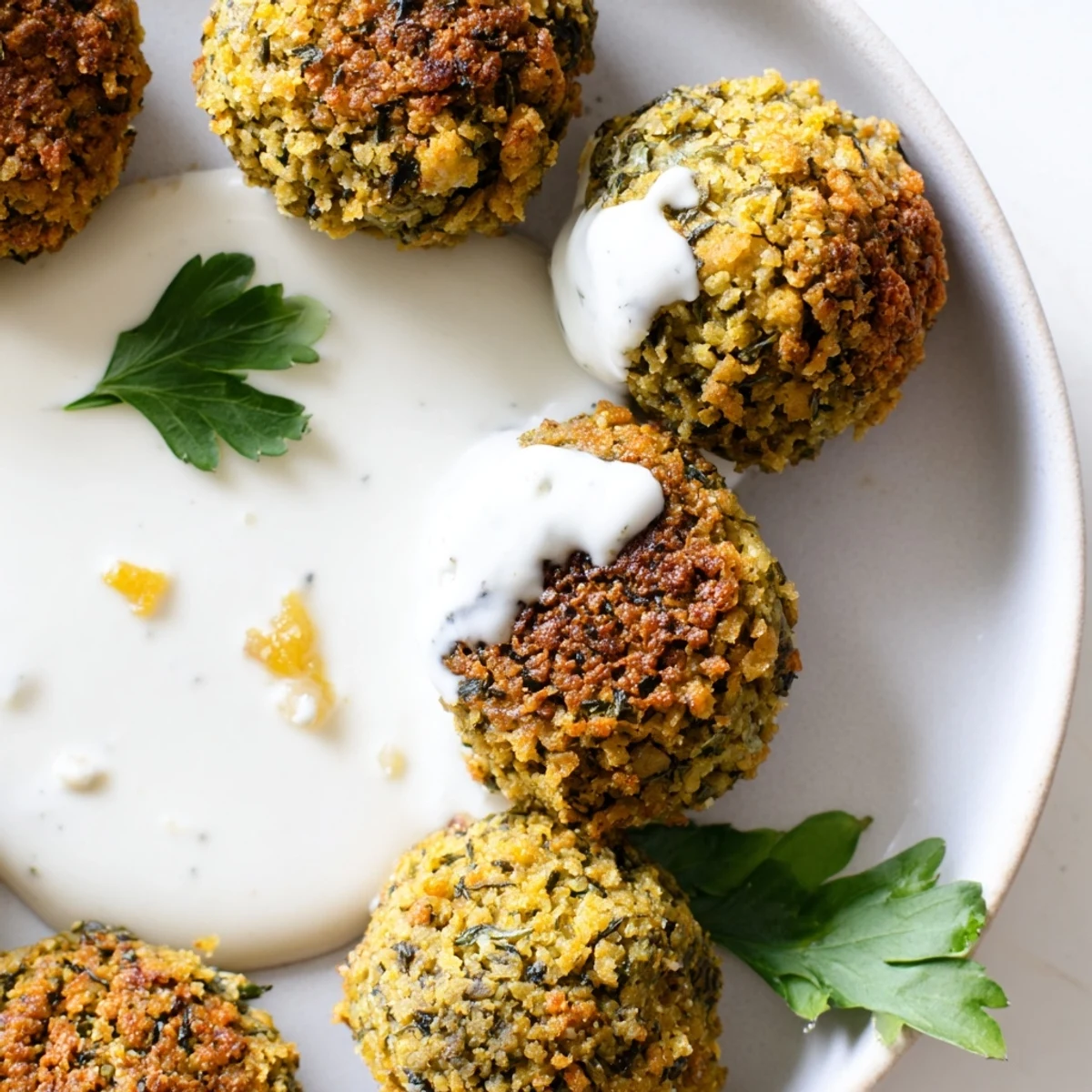
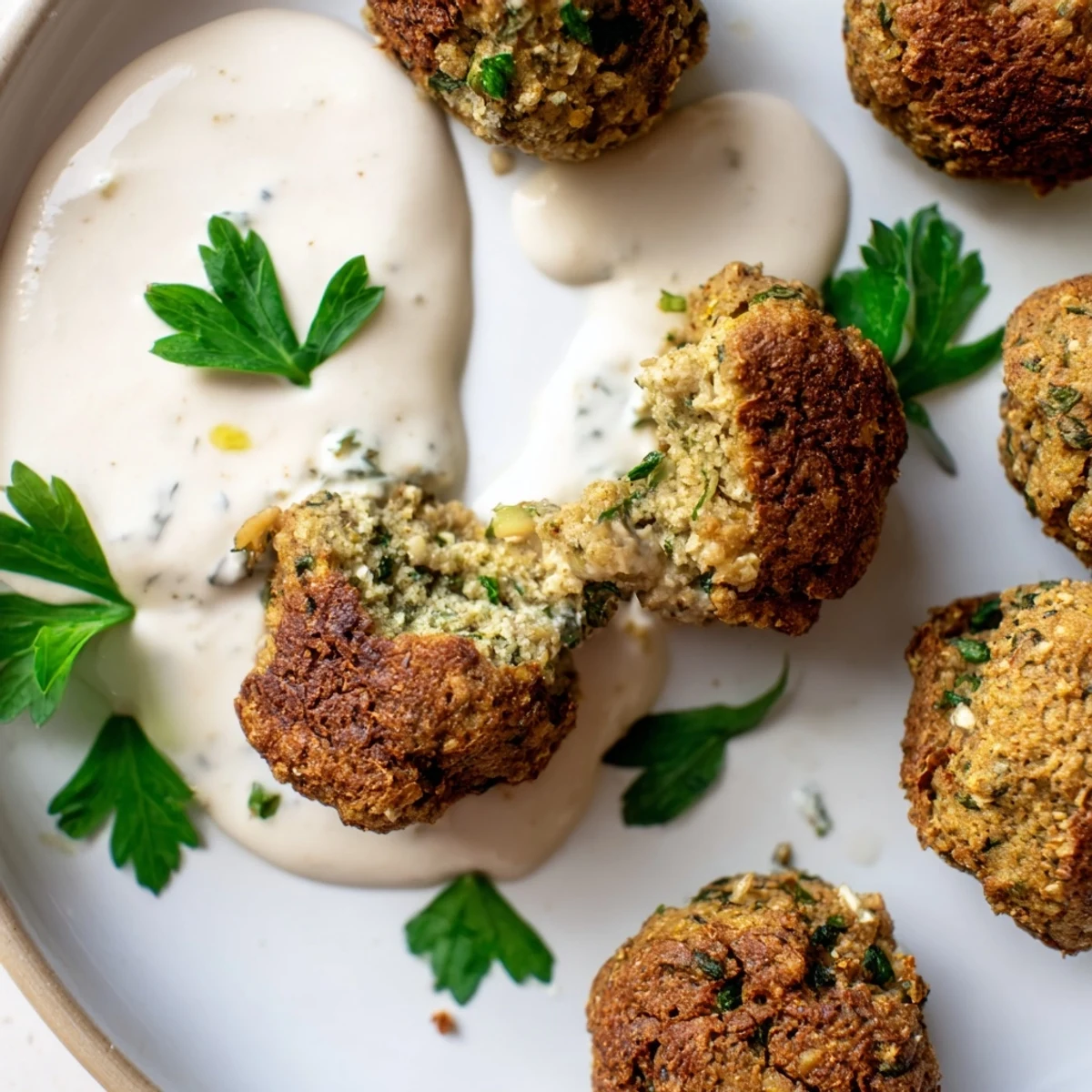
- Arrange the warm falafel on a platter with a bowl of that garlic yogurt sauce nestled beside it. A squeeze of lemon over the top and some extra herbs scattered around never hurt anybody.
 Pin It
 One rainy Tuesday I pan fried these for just myself and ate them cross legged on the kitchen floor straight off the paper towels. Sometimes the best meals have nothing to do with presentation.
Serving Ideas Beyond the Obvious
Stuff three or four falafel into warm pita with shredded lettuce, diced tomatoes, pickled turnips, and a generous drizzle of that yogurt sauce. They also make a phenomenal topping for a simple bowl of hummus with a scattering of pickled onions and a glug of good olive oil.
If Frying Feels Like Too Much Work
Brush the shaped falafel generously with oil and bake them on a parchment lined sheet at 400 degrees for twenty five to thirty minutes, flipping once halfway through. They will not be quite as shatteringly crisp as the fried version but they come remarkably close and your stove stays clean.
Storing and Reheating
Cooked falafel keep in an airtight container in the fridge for up to four days and reheat beautifully in a 375 degree oven for about ten minutes. The uncooked mixture also freezes well once shaped, so you can fry them straight from frozen whenever the craving hits.
- Freeze shaped falafel on a tray first, then transfer to a bag so they do not stick together.
- Add an extra minute or two to frying time if cooking from frozen.
- The yogurt sauce tastes best fresh but will hold in the fridge for two days.
 Pin It
 Falafel is one of those recipes that teaches you patience and rewards you with something golden and deeply satisfying. Make them once and they will become part of your regular rotation, no rooftop potluck required.
Recipe Questions & Answers
- → Do I need to use dried chickpeas or can I use canned?
-
Dried chickpeas soaked overnight are strongly recommended for falafel. Canned chickpeas contain too much moisture, which results in a mushy texture that falls apart during frying. The soaked dried chickpeas provide the characteristic coarse, crunchy bite.
- → Can I bake these falafel instead of frying?
-
Yes, you can bake them for a lighter version. Brush the formed falafel generously with oil and bake at 400°F (200°C) for 25–30 minutes, flipping once halfway through. They will be slightly less crunchy but still delicious.
- → Why does the falafel mixture need to rest in the fridge?
-
Refrigerating the mixture for 20–30 minutes helps it firm up, making it much easier to shape into balls or patties. The resting time also allows the flour and baking powder to bind the ingredients together, reducing the chance of falafel falling apart during cooking.
- → What can I substitute for the yogurt in the garlic sauce?
-
For a dairy-free or vegan version, substitute the Greek yogurt with plain unsweetened non-dairy yogurt such as coconut, almond, or soy-based. The sauce will still be creamy and flavorful with the garlic, lemon, and herbs.
- → How do I store and reheat leftover falafel?
-
Store cooked falafel in an airtight container in the refrigerator for up to 3 days. To reheat and restore crispness, place them in a 375°F (190°C) oven for 10–12 minutes. Avoid microwaving as it will make them soggy.
- → What oil temperature is best for frying falafel?
-
The ideal oil temperature is 350°F (175°C). Too hot and the outside burns before the inside cooks through; too cool and the falafel absorbs excess oil and becomes greasy. A deep-fry or instant-read thermometer helps maintain consistent heat.