
 Pin It
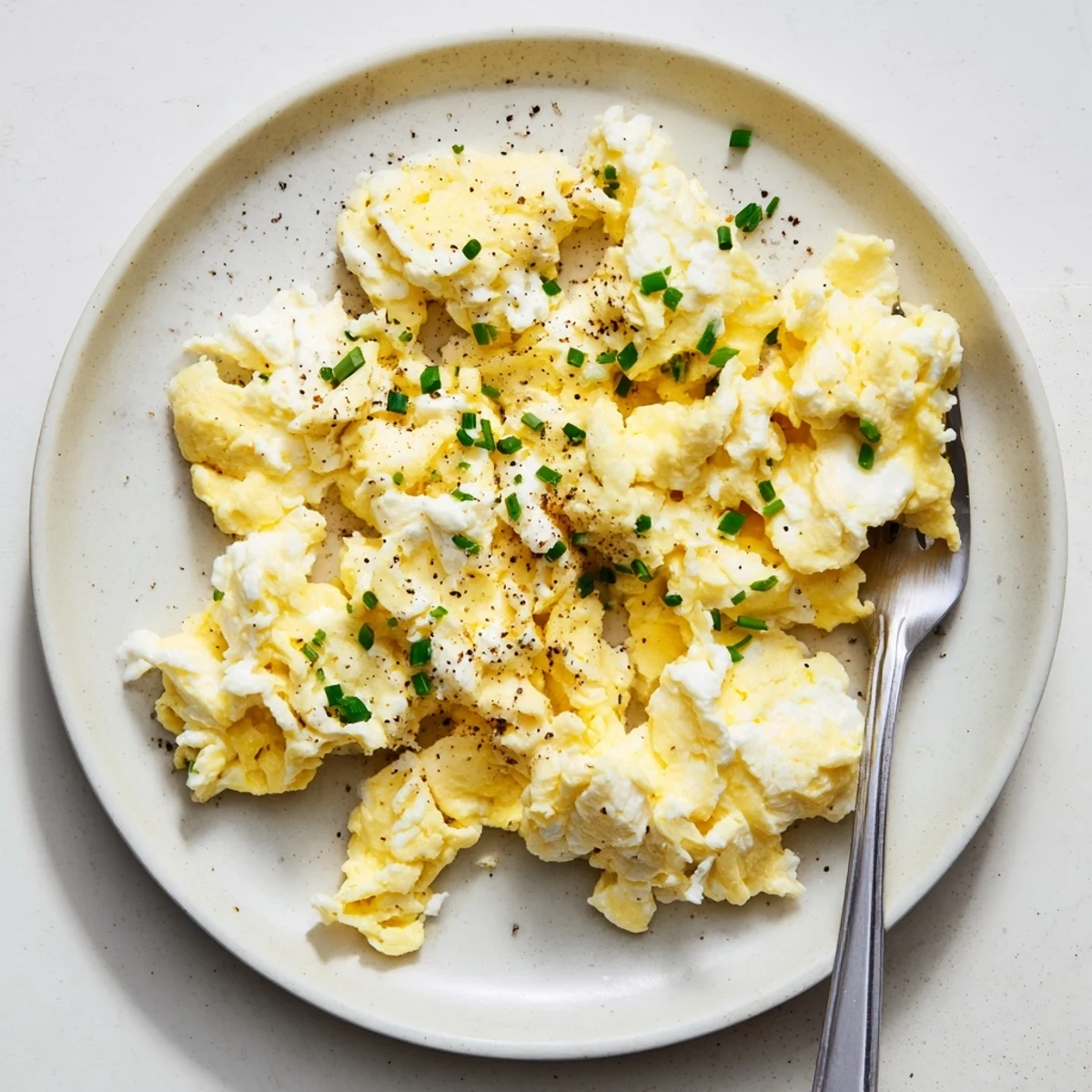
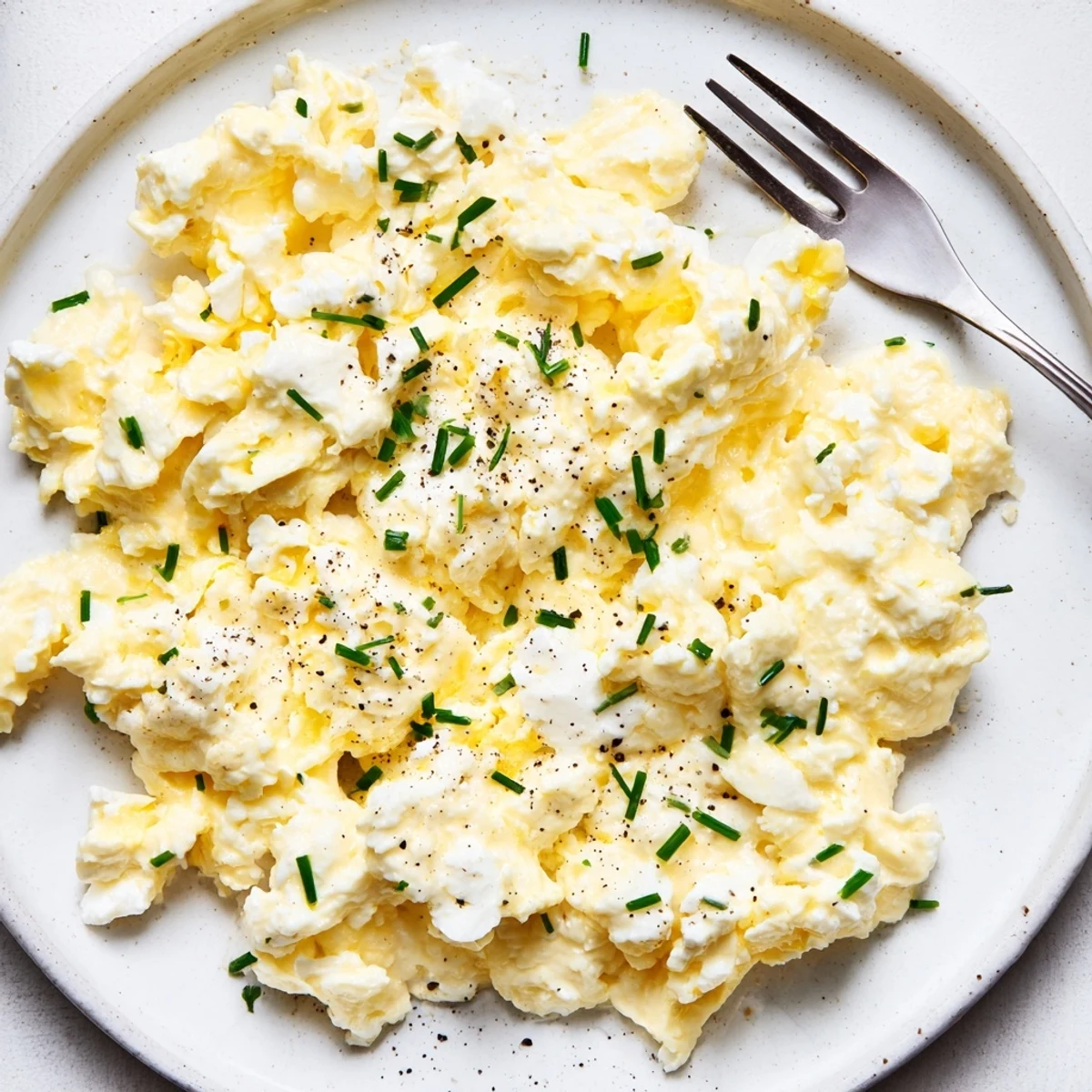
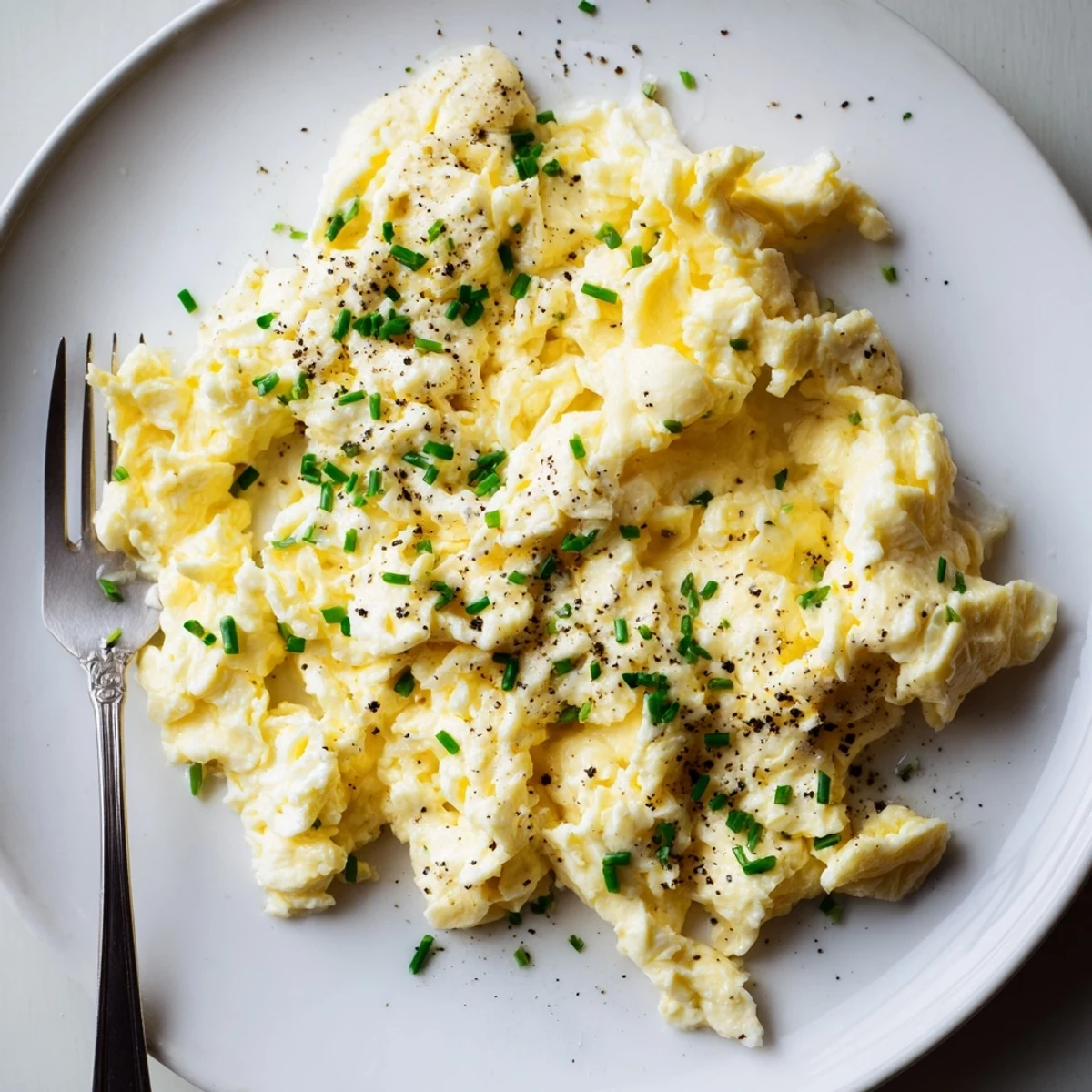
 Whisk four eggs with salt and pepper, then stir in 1/2 cup cottage cheese and half the chopped chives. Melt butter in a nonstick skillet over medium-low and pour in the mixture. Stir gently with a flexible spatula, scraping the pan to form soft curds; remove from heat while still slightly runny so residual heat finishes cooking. Top with remaining chives and serve immediately — about 10 minutes total for fluffy, creamy eggs with bright herb notes.
The skillet was still warm from yesterday morning when I cracked four eggs into a bowl and spotted the forgotten tub of cottage cheese in the fridge door. Something about their curds caught in golden curds of egg sounded like the kind of accident worth having. I stirred them in without thinking too hard and ended up with the fluffiest, most pillowy scramble I had ever made. The chives were an afterthought, snipped from the pot on my windowsill, but they turned a quiet breakfast into something I immediately wanted to tell someone about.
I made this for my sister on a rainy Sunday when the only plan was to sit at the kitchen table and complain about the week. She took one bite, stopped mid sentence, and said nothing for a solid thirty seconds. That silence was the highest compliment I have ever received for a breakfast dish.
Ingredients
- 4 large eggs: The foundation of the dish so use the freshest ones you can find because the flavor really comes through here.
- 1/2 cup cottage cheese: Full fat gives the richest result but low fat works beautifully too and the curds break down just enough to create pockets of creamy surprise.
- 1 tablespoon unsalted butter: You need this for the nonstick pan and the flavor so do not try to skip it.
- 2 tablespoons fresh chives, finely chopped: Their mild onion sweetness is what makes this feel like a proper meal rather than a rushed morning.
- 1/4 teaspoon salt: Just enough to bring the eggs to life without overpowering the cheese.
- 1/8 teaspoon freshly ground black pepper: A gentle warmth at the finish and always grind it fresh if you can.
Instructions
- Whisk everything together:
- Crack the eggs into a medium bowl, add the salt and pepper, and whisk until the yolks and whites are fully blended and the mixture looks uniform.
- Fold in the cottage cheese and chives:
- Gently stir in the cottage cheese and half the chives, leaving some visible curds rather than smashing them into nothing.
- Melt the butter slowly:
- Set your nonstick skillet over medium low heat and let the butter melt until it starts to foam slightly but does not brown.
- Pour and stir with patience:
- Slide the egg mixture into the pan and use a flexible spatula to gently sweep the sides and bottom, letting soft curds form while keeping everything loose and creamy for about two to three minutes.
- Pull the pan early:
- Take the skillet off the heat while the eggs still look slightly underdone because they will finish cooking in their own warmth and you want them soft, not rubbery.
- Finish with chives and serve:
- Sprinkle the remaining chives over the top and slide the eggs onto plates immediately while they are still steaming and perfect.
 Pin It
 There is something about serving eggs this soft to people you love that makes a regular morning feel like a small gift you did not expect to give.
Ways to Make It Your Own
A handful of baby spinach wilts into the eggs beautifully if you toss it in during the last minute of cooking. Smoked salmon laid on top at the end turns this into something worthy of a holiday brunch. I once folded in a spoonful of leftover caramelized onions and it was so good I nearly made a second batch immediately.
Bread Pairings That Actually Matter
Thick toasted sourdough is the obvious choice because the tang cuts through the richness of the eggs and cheese perfectly. A dense slice of rye adds an earthy contrast that makes every bite more interesting. If you have day old bread, toast it in the butter left in the pan after the eggs come out.
Tools and Kitchen Notes
A flexible spatula is the one tool that makes a real difference here because a stiff one will tear the curds apart instead of lifting them gently. Keep a small bowl near the stove for tasting as you go. The right nonstick pan means you can cook on lower heat without worrying about sticking.
- Your whisk does not need to be fancy but it should fit comfortably in your bowl.
- Always crack eggs on a flat surface rather than the edge of the bowl to avoid shell fragments.
- Wash and dry your chives before chopping because wet herbs will water down the flavor.
 Pin It
 Cooking does not need to be complicated to be memorable, and these eggs are proof that sometimes the best dishes come from opening the fridge and trusting what you find.
Recipe Questions & Answers
- → How do I keep the eggs creamy and soft?
-
Cook over medium-low heat and stir slowly, forming large, soft curds. Remove the pan while the eggs are slightly underdone; carryover heat will finish them, preserving a creamy texture.
- → Can I use low-fat cottage cheese?
-
Yes. Low-fat cottage cheese will reduce richness but still adds moisture and tenderness. For extra creaminess, stir in a splash of cream or a small knob of butter at the end.
- → What’s the best heat level and pan to use?
-
A nonstick skillet over medium-low provides gentle, even heat. Too hot and the eggs will dry; gentle heat lets curds form slowly for a custardy finish.
- → Are there good mix-in options?
-
Additions like baby spinach, smoked salmon, or a sprinkle of grated cheddar complement the cottage cheese and chives without overpowering the delicate texture.
- → How should leftovers be stored and reheated?
-
Cool quickly, store in an airtight container in the fridge for up to 2 days. Reheat gently over low heat or in short bursts in the microwave to avoid overcooking.
- → What can I substitute for cottage cheese?
-
Ricotta is a smooth, milder substitute that yields similar creaminess. For a tangier note, try a small amount of crème fraîche or strained yogurt.