
 Pin It
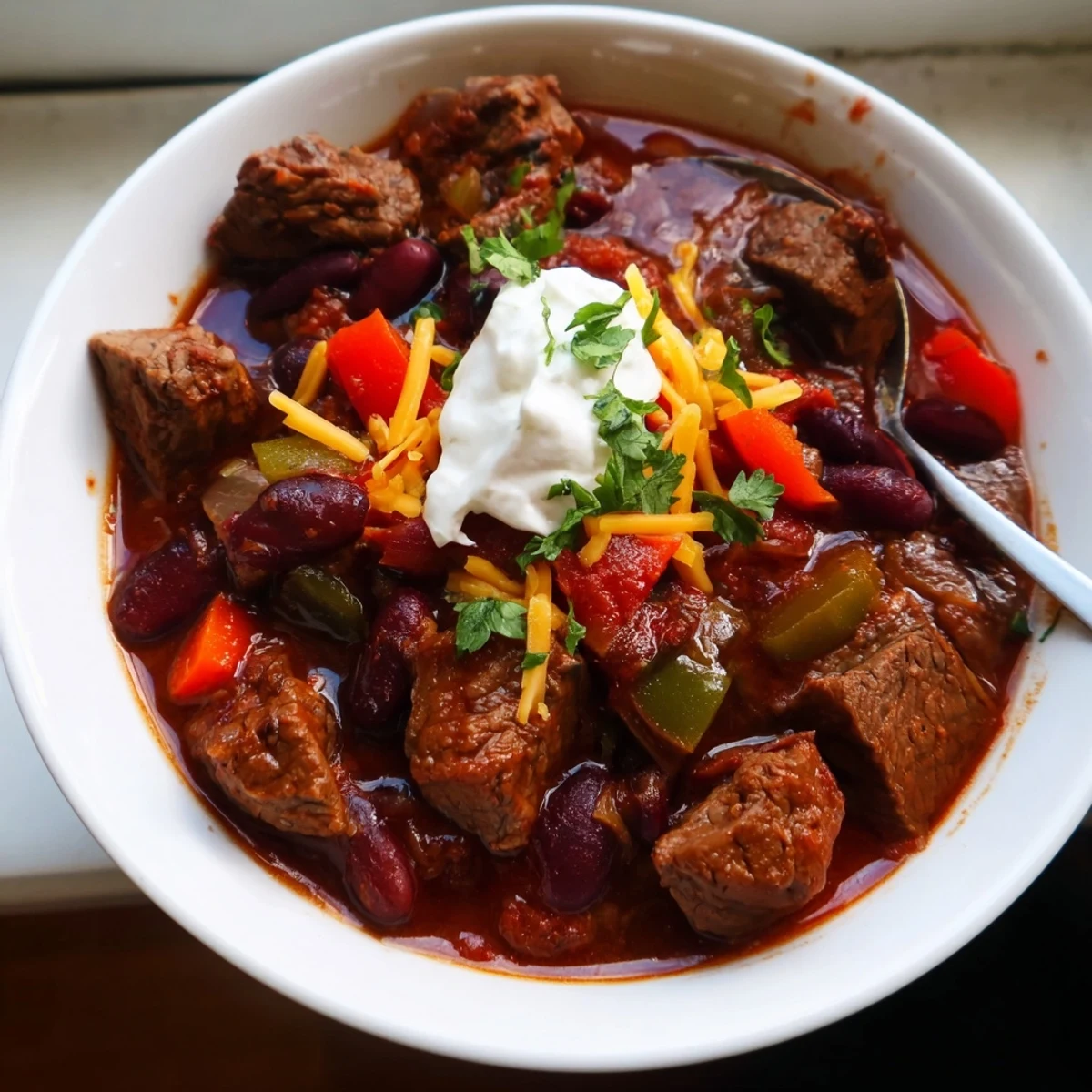
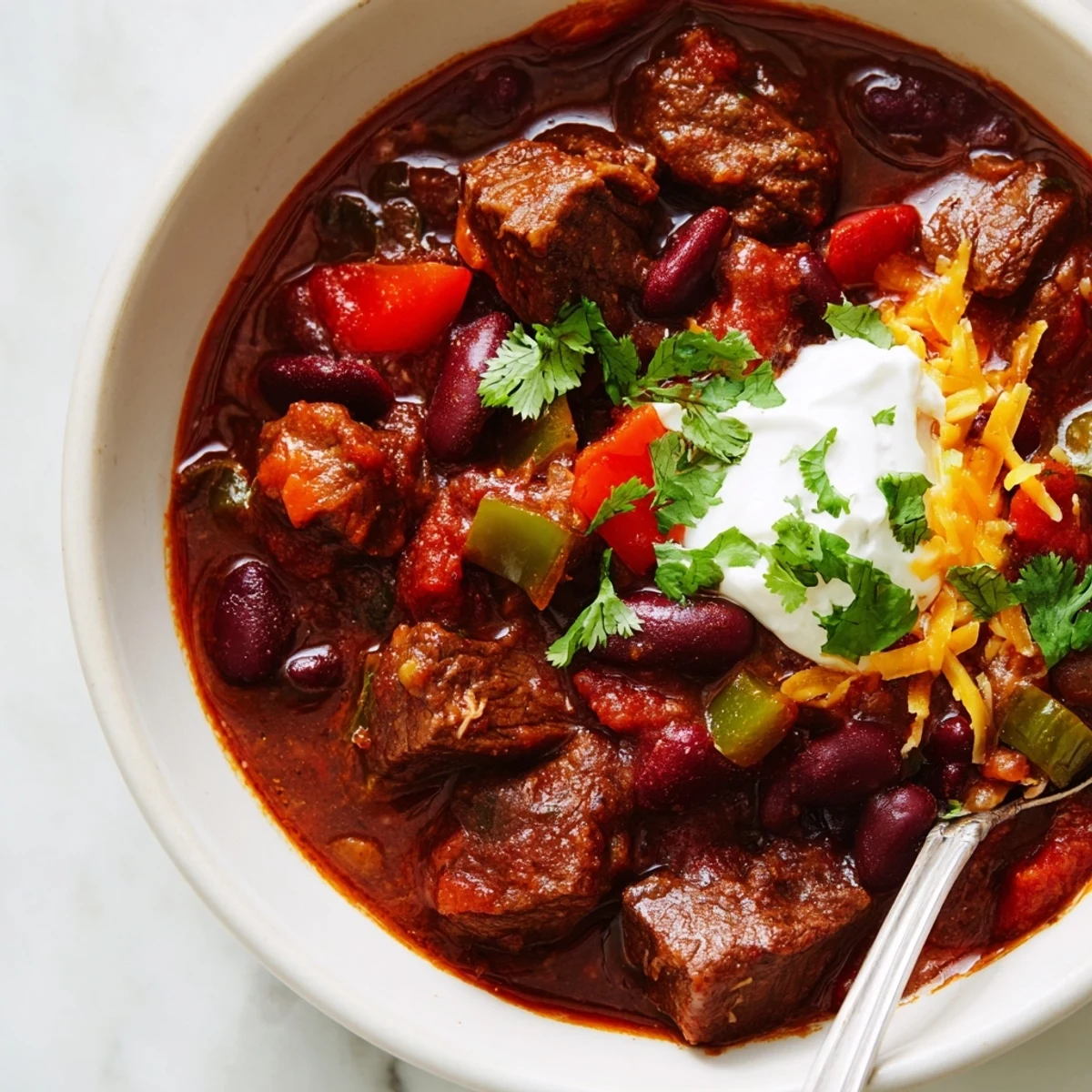
 This beefy chili stew brings together tender chunks of beef chuck, kidney beans, and black beans in a deeply flavored chili sauce made with diced tomatoes, cumin, and smoked paprika.
Browning the beef first creates a rich fond that builds layers of flavor throughout the long simmer. Carrots and bell pepper add natural sweetness that balances the heat from cayenne and chili powder.
The entire dish comes together in one Dutch oven, making cleanup easy. It feeds six generously and freezes beautifully for up to two months, so making a double batch is always a smart move.
The rain was hammering the kitchen window so hard that Tuesday evening that I barely heard the pot start bubbling on the stove, and honestly that sound became the coziest thing I experienced all week. I had grabbed a chuck roast on impulse at the butcher that morning, with no real plan beyond wanting something that would make the whole apartment smell incredible. Two hours later, I was sitting on the floor with a bowl of this stew, completely content, wondering why I ever bother with complicated dinners.
I made a double batch for a friends movie night once and three people asked for the recipe before the opening credits finished rolling. There is something about a steaming bowl of thick, spicy stew that makes people drop their guard and start talking about comfort food from their own childhoods.
Ingredients
- 2 lbs beef chuck, cut into 1 inch cubes: Chuck is the undisputed king of stews because the fat renders down and keeps every bite tender, so do not be tempted to trim it too aggressively.
- 1 large onion, chopped: A standard yellow onion builds the sweet, savory foundation that holds the whole pot together.
- 1 green bell pepper, diced: It adds a slight bitterness that balances the richness of the beef and beans beautifully.
- 2 cloves garlic, minced: Fresh garlic is non negotiable here, and you should add it after the other vegetables have already softened so it never burns.
- 2 carrots, sliced: They bring a gentle sweetness that rounds out the chili heat without overpowering it.
- 1 can diced tomatoes: The acidity cuts through the heaviness and helps break down the beef during the long simmer.
- 1 can kidney beans, drained and rinsed: Rinsing canned beans removes excess starch and keeps the broth clear and clean tasting.
- 1 can black beans, drained and rinsed: These add a creamy interior texture that contrasts nicely with the firmer kidney beans.
- 3 tbsp chili powder: This is the backbone of the entire flavor profile, so use a brand you actually trust and enjoy.
- 1 tsp ground cumin: Cumin adds an earthy warmth that makes the stew taste like it has been simmering all day, even when it has not.
- 1/2 tsp smoked paprika: Just a half teaspoon gives a subtle campfire quality that makes people ask what your secret ingredient is.
- 1/4 tsp cayenne pepper, optional: Skip it entirely if you are spice sensitive, or double it if you want a genuine kick.
- Salt and pepper, to taste: Season the beef before browning and then adjust again at the very end for the best results.
- 4 cups beef broth: Low sodium broth gives you total control over the salt level throughout cooking.
- 2 tbsp tomato paste: Bloom it with the spices for two minutes and it deepens the entire pot with concentrated umami.
- 2 tbsp olive oil: A thin coating is all you need to get a proper sear on the beef cubes.
Instructions
- Get a good sear on the beef:
- Heat the olive oil in a large Dutch oven over medium high heat and brown the beef cubes on all sides, working in batches so you never crowd the pan. Those caramelized bits on the meat are carrying most of the deep flavor your stew will build on.
- Soften the vegetables:
- Toss the onion, bell pepper, carrots, and garlic into the same pot and sauté for five to seven minutes, scraping up any browned bits stuck to the bottom. The vegetables should look relaxed and glossy, not crispy or raw.
- Bloom the spices:
- Stir in the tomato paste, chili powder, cumin, smoked paprika, cayenne, salt, and pepper, then let everything cook together for about two minutes until your kitchen smells unreal. This step is where the chili flavor actually wakes up and develops real depth.
- Build the broth:
- Slide the browned beef back into the pot, pour in the diced tomatoes and beef broth, and bring everything to a gentle simmer. Give it one good stir to combine, then resist the urge to keep messing with it.
- Let time do the work:
- Reduce the heat to low, cover the pot, and walk away for one full hour, stirring only occasionally when you happen to walk by. The beef needs this uninterrupted time to become fork tender and absorb all those spice flavors.
- Add the beans and finish:
- Stir in both cans of rinsed beans and simmer uncovered for another twenty to thirty minutes until the stew thickens to your liking. The uncovered time is what transforms it from a soup into a proper, hearty stew.
- Taste and serve:
- Ladle it into bowls while piping hot, and if you want to gild the lily, top with chopped cilantro, a dollop of sour cream, or a handful of shredded cheese.
 Pin It
 The second time I made this stew, I left a voicemail for my mother telling her the apartment smelled better than any restaurant I had ever been to, and she laughed and said that is exactly how you know a recipe is a keeper.
What to Serve Alongside It
Crusty bread is the obvious choice and honestly the correct one, because you will want something to soak up every last bit of that thick, spiced broth. Over rice works too, especially if you are stretching leftovers into a second meal and want it to feel slightly different.
Handling Leftovers and Freezing
This stew tastes even better the next day after the flavors have had overnight to mingle and settle into something richer and more cohesive. It freezes beautifully for up to two months, which means you can make a massive batch and essentially gift your future self a ready made dinner.
Making It Your Own
The beauty of a stew like this is how forgiving it is once you understand the basic technique of searing, deglazing, and simmering.
- Try swapping half the beef for sliced smoked sausage if you want a slightly different protein profile with an extra smoky punch.
- Adjust the chili powder and cayenne up or down to match whatever your crowd can handle without reaching for milk.
- Always taste the broth right before serving, because a final pinch of salt can bring the entire pot from good to unforgettable.
 Pin It
 Some dinners are about showing off, but this one is about showing up with something warm and honest that feeds people deeply. Keep this recipe close, because you will come back to it every single time the weather turns or the week feels too long.
Recipe Questions & Answers
- → What cut of beef works best for this stew?
-
Beef chuck is ideal because it has good marbling that breaks down during the long simmer, resulting in melt-in-your-mouth tender pieces. Beef brisket or short ribs are also excellent alternatives.
- → Can I make this stew less spicy?
-
Absolutely. Simply skip the cayenne pepper and reduce the chili powder to 2 tablespoons. The smoked paprika and cumin will still provide plenty of flavor without the heat.
- → How do I store and reheat leftovers?
-
Store cooled stew in an airtight container in the refrigerator for up to 4 days. Reheat gently on the stovetop over medium-low heat, adding a splash of broth if it has thickened too much. It also freezes well for up to 2 months.
- → Can I use dried beans instead of canned?
-
Yes, but you will need to soak and cook them beforehand. Use about 3/4 cup each of dried kidney beans and black beans, soaked overnight and cooked until tender before adding to the stew in step 6.
- → What should I serve with this chili stew?
-
Crusty bread is perfect for soaking up the rich broth. It also pairs well over steamed white or brown rice. Top individual bowls with shredded cheese, sour cream, chopped cilantro, or sliced green onions for extra flavor and texture.
- → Why do I need to brown the beef in batches?
-
Crowding the pot causes the beef to steam rather than sear, which means you lose that deep caramelized flavor. Working in batches ensures each piece gets a proper brown crust, which is key to building a rich-tasting stew.