 Pin It
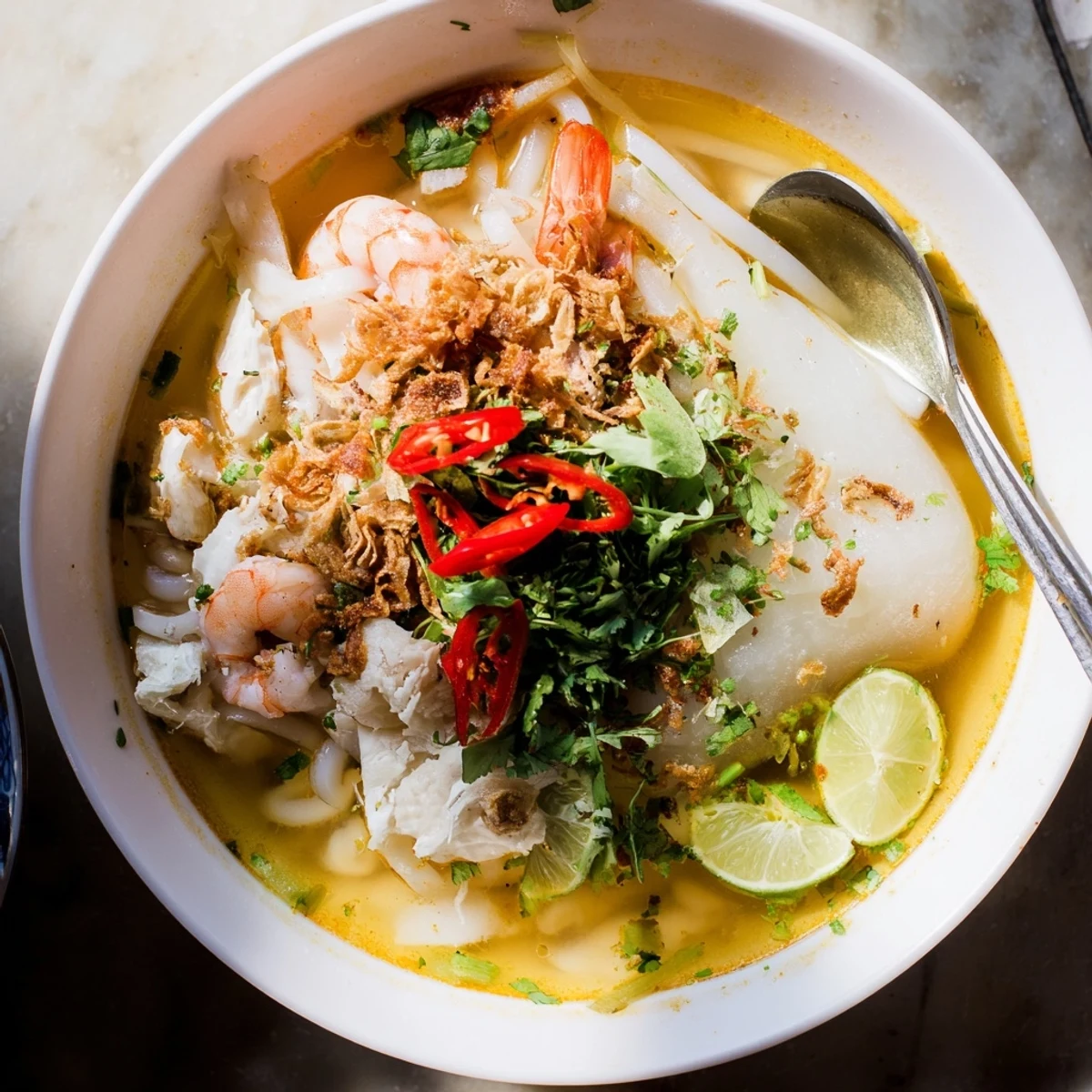
 Banh Canh Cua brings together the comforting textures of thick, chewy tapioca noodles with the sweetness of fresh crab and shrimp in a rich, aromatic broth. This Vietnamese noodle soup simmers pork bones with chicken stock, onion, and garlic to create a deeply flavorful base, then layers in crab meat, fish cakes, and shrimp for a protein-packed bowl. The dish comes together in just over an hour, making it perfect for weekend cooking when you want something nourishing and satisfying. Top with fried shallots, fresh cilantro, spring onions, and a squeeze of lime for brightness, adjusting the heat with sliced chilies to your preference.
Rain was hammering against my kitchen window when I first attempted banh canh cua. The steam rising from the pot carried that unmistakable ocean fragrance that immediately transported me back to a tiny street stall in Saigon. I remember feeling both intimidated and exhilarated, watching those thick, glossy noodles swim in the amber broth.
My aunt leaned over my shoulder that day, pointing out that the broth needed another fifteen minutes. She was right somehow the crab sweetness hadnt fully bloomed yet. We stood there together, tasting and adjusting, until the kitchen smelled like a Vietnamese harbor at dawn.
Ingredients
- Chicken stock: Use a quality homemade stock if possible, it creates the foundation that makes everything else sing
- Pork bones: Blanching first removes impurities that could cloud your beautiful clear broth
- Fresh crab meat: The sweetness of real crab is non negotiable here, though imitation works in a pinch
- Banh canh noodles: These thick tapioca noodles have this incredible bouncy texture that transforms the whole dish
- Fried shallots: Do not skip these, they add this crispy savory depth that makes people ask whats your secret
Instructions
- Build your broth base:
- Combine chicken stock, blanched pork bones, onion halves, smashed garlic, salt and sugar in your largest pot. Bring everything to a rolling boil, then lower the heat and let it bubble gently for 30 minutes. Skim any foam that rises to the top.
- Season and strain:
- Stir in the fish sauce, letting it dissolve completely. Remove the pork bones and onion pieces with tongs or a slotted spoon.
- Cook the shrimp:
- Drop peeled shrimp into the hot broth and simmer for just 2 to 3 minutes. They will turn pink and opaque quickly. Remove them immediately so they do not toughen up.
- Infuse crab flavor:
- Add crab meat and sliced fish cakes to the broth, letting them simmer gently for 5 to 7 minutes. The crab will release its sweet essence into the liquid.
- Prepare the noodles:
- Cook banh canh noodles according to package directions, usually just a few minutes. Drain and give them a quick rinse under cool water to stop the cooking.
- Assemble your bowls:
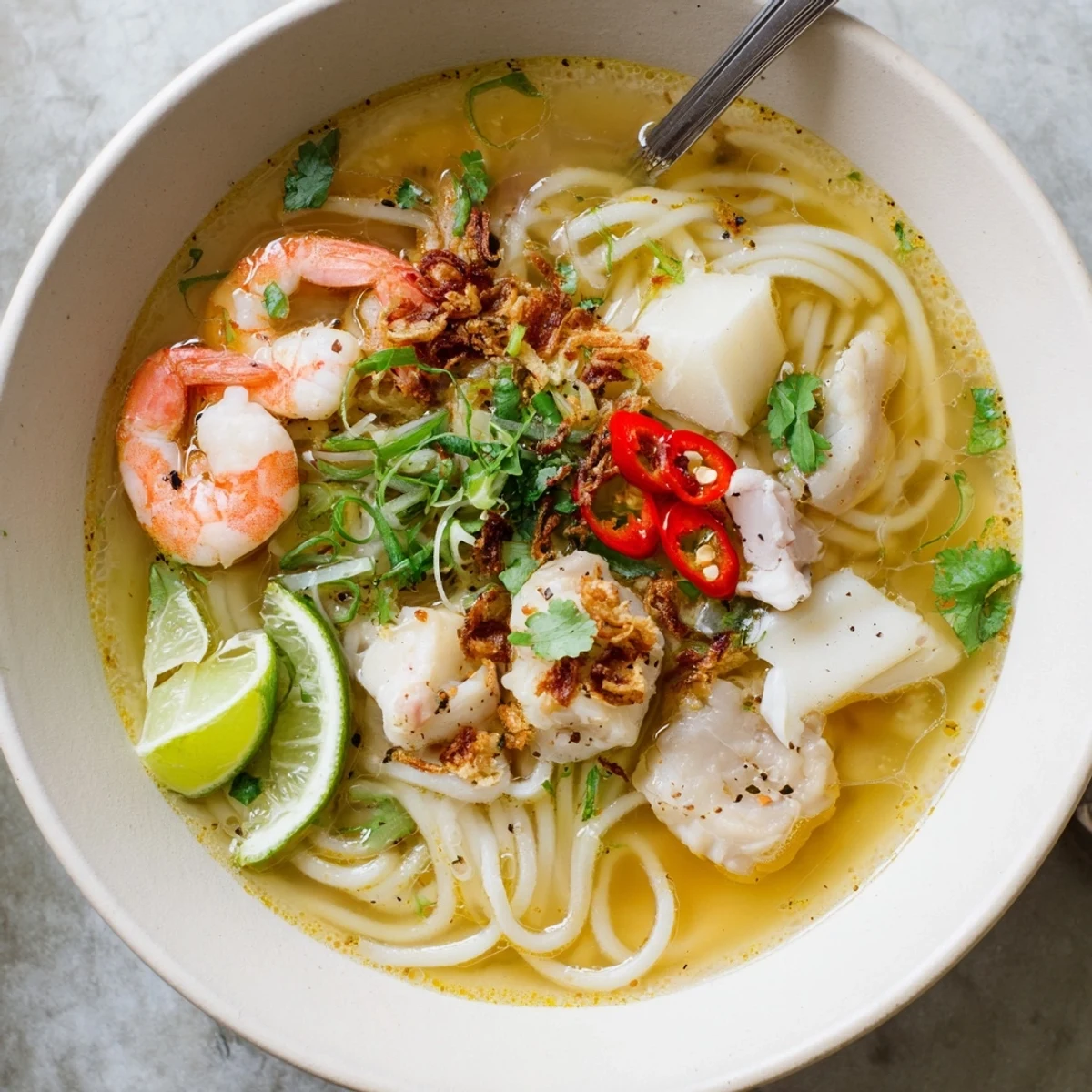
- Divide noodles among four deep serving bowls. Arrange shrimp, crab meat, and fish cakes on top of the noodles.
- Finish with hot broth:
- Ladle the steaming broth directly over the noodles and seafood. The liquid should come up just below the rim.
- Add the garnishes:
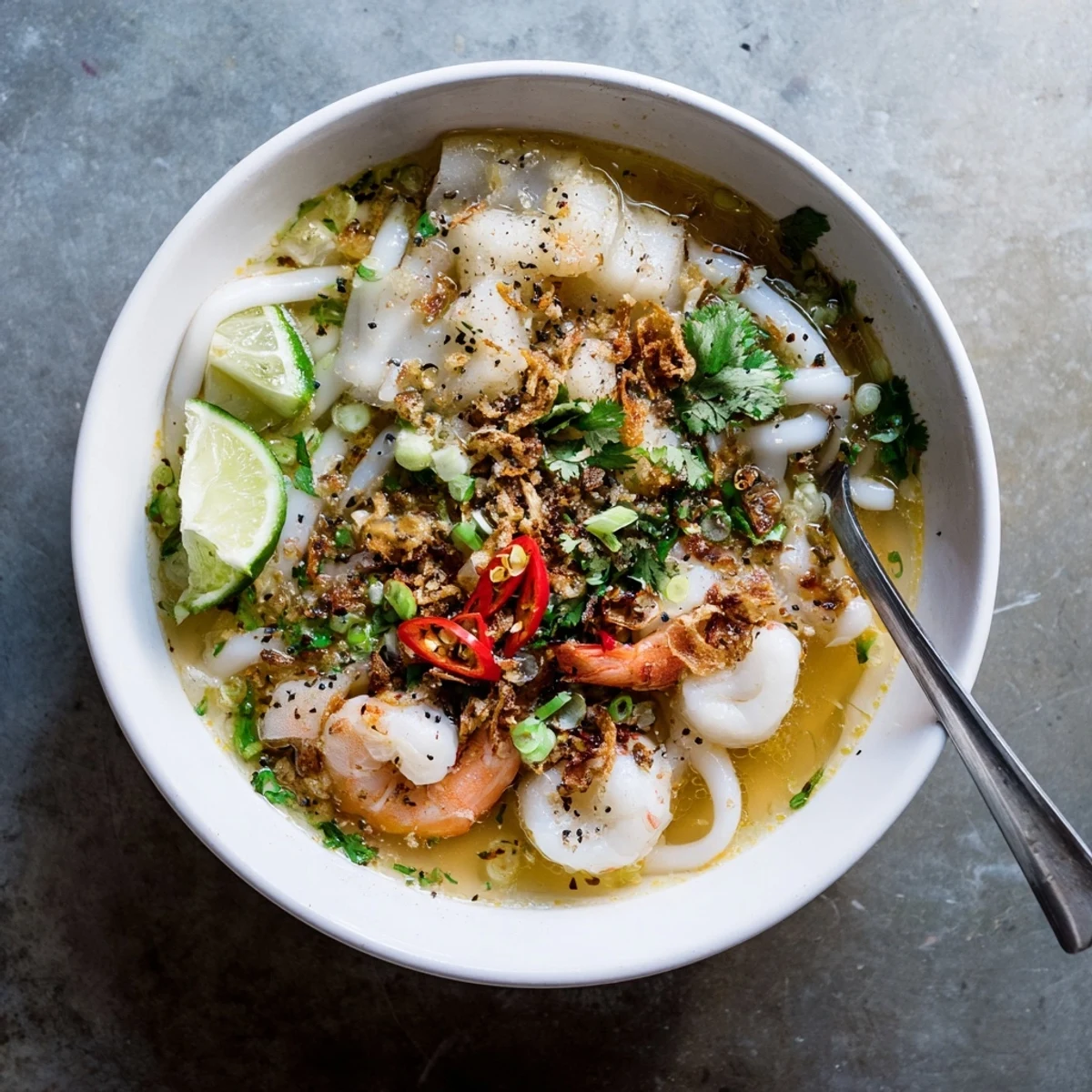
- Sprinkle spring onions, fried shallots, cilantro, and chili slices over each bowl. Serve lime wedges and a pepper grinder on the side.
 Pin It
 That rainy day, my friends showed up unexpectedly with hungry stomachs and skeptical faces. One spoonful in and they were all quiet, just the sound of slurping noodles filling the room. Someone asked for seconds before even finishing their first bowl.
Making It Your Own
I have started adding annatto oil sometimes, just a splash, which gives the broth this beautiful red orange hue. It does not change the flavor much but the visual impact is stunning.
Noodle Wisdom
Fresh banh canh noodles are worth seeking out at Asian markets. If you can only find frozen ones, thaw them completely before cooking and do not overcook them or they will turn to mush.
Perfect Pairings
This soup really wants something crisp and refreshing on the side. I like to serve it with a simple cucumber salad dressed with rice vinegar. You could also offer Vietnamese fried spring rolls on the side.
- Keep extra fish sauce at the table for guests who love salty
- Have plenty of napkins ready, this is hands on food
- The broth actually tastes better the next day
 Pin It
 There is something profoundly nourishing about a bowl of banh canh cua. It is the kind of soup that fixes bad days and makes good days even better.
Recipe Questions & Answers
- → What makes Banh Canh Cua different from other Vietnamese noodle soups?
-
The defining characteristic is the thick, chewy tapioca noodles (banh canh) which have a unique texture similar to udon but with a translucent appearance. The broth is also typically thicker and more robust than pho, focusing intensely on crab and seafood flavors rather than beef or aromatic spices.
- → Can I make Banh Canh Cua with frozen crab?
-
Absolutely. Frozen crab meat or cooked crab claws work beautifully in this dish. Thaw completely before adding to the broth, and adjust cooking time to just heat through rather than cook raw. The broth's robust flavors will still shine through.
- → How do I prevent the tapioca noodles from sticking together?
-
Cook the noodles according to package directions, then drain and rinse lightly with cool water. Toss with a small amount of oil if not serving immediately. When assembling bowls, add the hot broth quickly to help separate the strands.
- → What can I substitute for fish cakes?
-
You can use additional shrimp or crab meat, sliced tofu puffs, or even thin slices of pork tenderloin. Some home cooks also add quail eggs or soft-boiled eggs for extra protein and richness.
- → How long does the broth keep in the refrigerator?
-
The broth can be made ahead and stored in an airtight container in the refrigerator for up to 3 days. Freeze for longer storage (up to 3 months). Reheat gently on the stove, adding fresh seafood just before serving to prevent overcooking.
- → Is Banh Canh Cua gluten-free?
-
The tapioca noodles are naturally gluten-free, but fish cakes often contain wheat as a binder. For a completely gluten-free version, use gluten-free fish cakes or substitute with additional seafood, and ensure your fish sauce is certified gluten-free.